...
Mostrando entradas con la etiqueta historical-fiction. Mostrar todas las entradas

lunes, 21 de septiembre de 2015

Conversations of Lord Byron: Noted During a Residence with His Lordship at Pisa in the Years 1821 and 1822 - Thomas Medwin

Rating: 
21/09/15

The days belong to Byron.

I had written a review and, later, decided to delete it. Okay, I did not delete it, I just put it in the folder where legends die. Anyway, that review had quotes and facts and some nonsensical analysis of the conversations that Thomas Medwin transcribed, after a logical warning: he could deliver the substance but not the form, that being Byron's wit and eloquence.

I wrote that review and then realized how useless that was. I could say everything I wanted to say in one single quote. A quote by an extraordinary writer. The true enchanter of all words; familiar and unknown.

If, after I die, someone wants to write my biography,
There's nothing simpler.
It has just two dates—the day I was born and the day I died.
Between the two, all the days are mine.

- Fernando Pessoa, A Little Larger Than the Entire Universe: Selected Poems (61)

Between the two, all the days are mine.
Besides its unquestionable beauty, there is a particular sound that cuts the air like the sharpest of knives.
Between the two, all the days are mine.
A sound you can almost feel. There. Practically piercing your body, finding its way to your mind in the most incredible display of self-preservation.
All the days are mine.

All the days are ours.


sábado, 15 de agosto de 2015

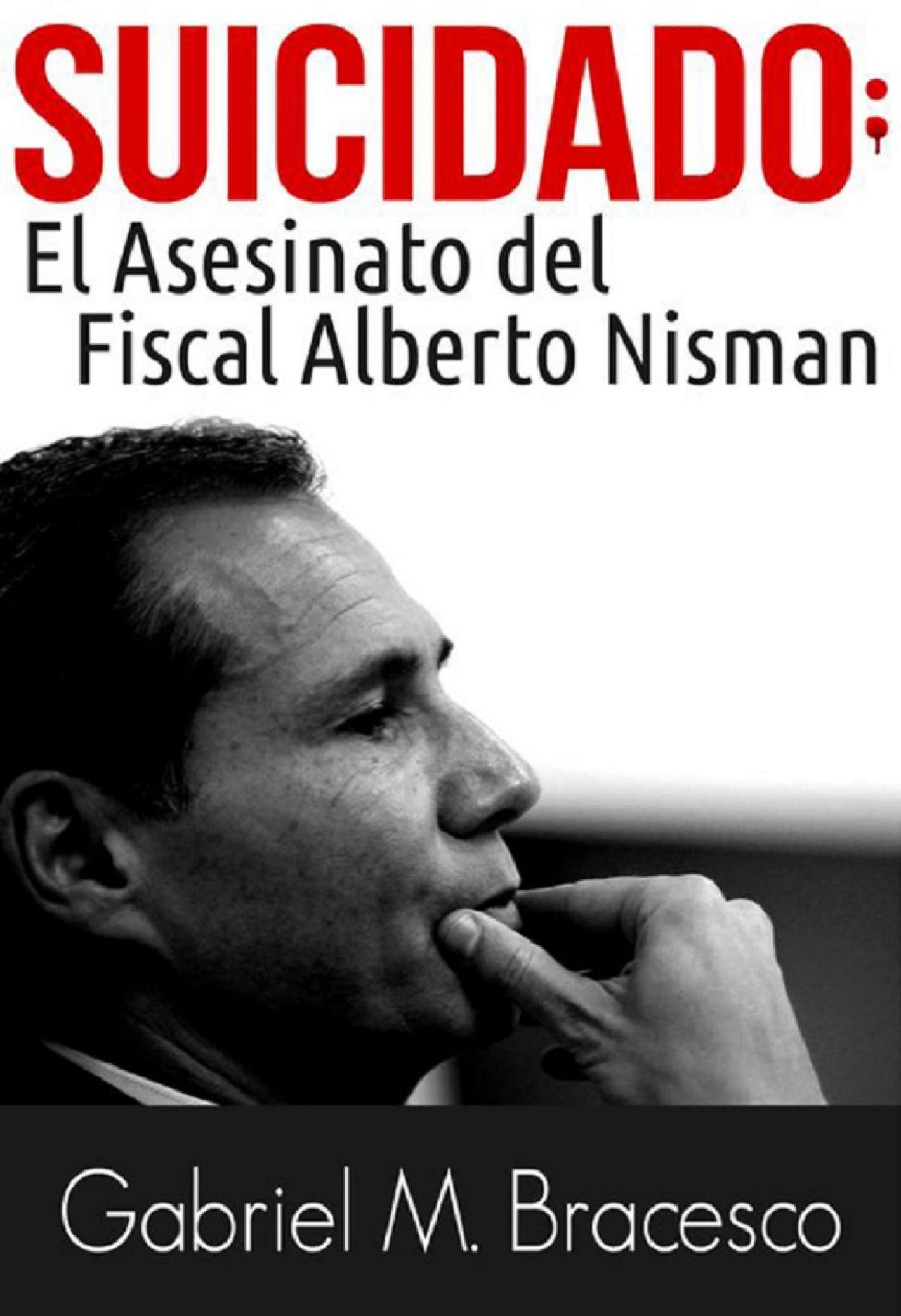
Suicidado: El Asesinato del Fiscal Alberto Nisman - G. M. Bracesco

Rating: 
17/07/15

- Vos sabés que en política pasa de todo.
You know that, in politics, anything can happen. 
(69)

- La Justicia no podrá devolverle la vida al Fiscal Alberto Nisman. Pero podrá devolvernos la dignidad a todos los argentinos si se atreve, como él se atrevió, a ir en busca de la verdad.
Justice can't bring prosecutor Alberto Nisman back to life. But it can bring back dignity to all Argentines if it dares, like he did, to go in search of the truth.
 
(234, Santiago Kovadloff's speech at Nisman's funeral)

January. Monday. Around 7 a.m. I woke up and went to brush my teeth. That is not the perfect line to start a review. I know, nothing poetic about picturing people brushing their teeth. But that is how everything started for me. When I got out of the bathroom, my mother was already up. She always tries to be up to say “take care, have a good day at work” (like that ever happens, but it is nice to have someone to tell you those things, anyway). I still don't know if I was suppose to go to work that day, because I remember I stayed all morning watching the news. And now I see an image I tweeted that Monday at 8.43 a.m. So, no, I did not go to work. And if my previous boss is reading this, now he knows the truth. The most relevant homicide in Argentina's recent criminal history was there. I had to know. I was not going anywhere.

So, like I said, I went back to my room and watched the news on my computer. I don't have a t.v. in my room–good habit–, but I can't go out before checking the news, the weather and other trivia. However, there was nothing of trivia in the news I was about to watch.
Argentine federal prosecutor, Alberto Nisman, was found dead in his apartment. I could not believe it. I remained in silence for a couple of minutes. Stunned. A mix of confusion and powerlessness took over me. When, how, WHO. Why? Not why. I could sense the reason. That man was the chief investigator of the 1994 car bombing of AMIA (Israelite Argentine Mutual Association), the Jewish center in Buenos Aires, where 85 people were killed and about 300 injured. That man accused President Cristina Fernández de Kirchner, his Foreign Minister Héctor Timerman (of Jewish religion, may I add) and other politicians of helping Iran to cover up the consequences of Argentina's worst terrorist attack. That man, on that Monday, was about to present his allegations to Congress. But that man had been killed hours ago, silencing the investigation forever. Condemning him and other 85 souls to oblivion. Making "justice" a simple word you can only find in the dictionary.
After a while, I came back to reality and went to my mother's bedroom to tell her. The reaction was the same. She could not believe it.
I still can't believe it.
Con esto, me juego la vida.
~
With this, I put my life at risk. (99, Nisman's words.)

That is how I found out about the murder of Nisman. And that is how Suicidado starts: with the retelling of how G. M. Bracesco found out.
Social media is a powerful thing. We know everything in real time. So, when journalist Damián Pachter tweeted, on January, 18, at precisely 11.35 p.m., that something was wrong in Nisman's apartment, the impact was reasonably tremendous. As he explains in the book, Bracesco himself was the first journalist that went to Puerto Madero to investigate and record everything that was going on. With that impressive amount of information, he created this work. Nonetheless, he warns us that his book constitutes a personal hypothesis.
Usually, the line that divides reality from fiction is ridiculously thin. And, according to Mark Twain, “The only difference between reality and fiction is that fiction needs to be credible”. In Argentina, reality has lost every possible credibility, so a book about our last twenty years of history, wouldn't be logical, at all.
Again, the writer states that this is his hypothesis. It is defined as kind of a crime novel. And no one can affirm that this series of unfortunate events did not occur exactly the way the author explained us.

Bracesco's writing is very straightforward. The lack of pretentiousness in language is something that I always celebrate. It is not a simplistic writing style that underestimate the reader, but his colloquial use of the language helps you to easily connect with him. And, in the middle of such harsh descriptions, he made room for some funny remarks concerning certain characters and situations.
The structure of the book is simple and coherent. It contains short and engaging chapters with the author's explanations and descriptions and also fragments of news, interviews and records that support his words. There are some mistakes (editor, hello), maybe the rush of getting this book out on the streets, but everything I could ignore (okay, I still underlined with my pencil every one of those because I am a neurotic reader; I have a problem and I am aware of it so don't judge me!) because of the revolting feeling in all organs of my body due to every dreadful detail that portrayed human degradation at its finest. A wave of sorrow and anger took over me and by the time I finished the book, I was immersed in a sea of uncertainty and hopelessness. I am Argentine. I should be used to that by now, right? And still, I should not get so used to it, for that leads to political and social anesthesia. A state of mind that many politicians long for. We certainly can't allow that.

From the beginning, Bracesco tells us that power delays and degenerates investigations that are not convenient to the current administration. That usually, it is the common people that do not belong to the corrupted circle, the ones that ruin the intended perfect crime. And that is exactly what happened with Alberto Nisman. In this book, you will find out the possible reasons for the AMIA bombing, the on-off relationship between Argentina and Iran, the role of Venezuela in that particular aspect, the truth behind the infamous memorandum of understanding signed with Iran which mere objective was to boost trade with them and guarantee impunity to Iranian suspects...
Se busca por una cuestión política, borrar una causa de un crimen de lesa humanidad.
~
For a political matter, they intend to erase a case about a crime against humanity. (45, Nisman's words)

...how the murder of Nisman was possibly perpetrated and the events that followed (an exiled journalist, frightened witnesses, media manipulation by the ruling party, Lagomarsino's story, a President answering through Facebook), with a special part regarding how the experts that were supposed to preserve the scene, did all the contrary. Negligence or determination. Stupidity or obedience. Coffee, croissants and sandals over blood.
El encubrimiento siempre tiene cara de incompetencia e ineptitud.
~
The act of covering up always has the face of incompetence and ineptness. (12)

The desperation to cover up all the loose ends can make you fatally sloppy.

The special prosecutor of this case is Viviana Fein, who, during that fatal night, asked journalists for prudence, patience and said that in the course of a few days they would know the real cause of death.
Six months later, I am writing these lines and we still do not know officially, if it was a suicide, a forced suicide or a murder. Even though the evidence screams murder so loud. And yet, we are the only ones that hear that scream, despite all the Government efforts to make us listen otherwise. For they buried the prosecutor's complaint against the President and her staff, but they cannot bury the feeling we have as a society, that something doesn't quite fit...
Hoy no tengo pruebas, pero tampoco tengo dudas.
~
Today I don't have evidence, but I don't have doubts either. (176, Cristina Kirchner's words)

In conclusion, a prosecutor was killed the day before he could present his allegations to Congress after a ten-year investigation. Something that would have shaken our Government completely. We do not know much, but we do know that nothing in politics happens by mistake nor by accident. Everything has its reason. Everything can be planned. And we are always in the middle of their personal interests. Politics, business, media, powerful companies. They can always understand each other. We are the ones always in the middle. Watching. Waiting. Waiting for the punch, for the adjustment, for the legal consequences only reserved to us, like a never-ending tribute to the Kafkaesque universe.

Alberto Nisman is another wound in this chain of corruption, money and power that so well defines Argentine history. We should never forget. Books like this one are necessary to prevent us from forgetting. A shocking book; a necessary reading. Because in oblivion lies impunity. This is a thrilling story... until you realize that the death of prosecutor Nisman is not fiction.
We cannot forget.

Today is July, 17. I am writing this review as we commemorate the 21st anniversary of AMIA bombing.
21 years. 85 victims. Not a single convict. I have to find the strength to believe that Nisman, the 86th victim, will not have the same fate. And yet...

The following is a 1947 poem by the eclectic Dylan Thomas, that Bracesco included in his book. With this, I finish.
Do not go gentle into that good night,
Old age should burn and rave at close of day;
Rage, rage against the dying of the light.

Though wise men at their end know dark is right,
Because their words had forked no lightning they
Do not go gentle into that good night.

Good men, the last wave by, crying how bright
Their frail deeds might have danced in a green bay,
Rage, rage against the dying of the light.

Wild men who caught and sang the sun in flight,
And learn, too late, they grieved it on its way,
Do not go gentle into that good night.

Grave men, near death, who see with blinding sight
Blind eyes could blaze like meteors and be gay,
Rage, rage against the dying of the light.

And you, my father, there on the sad height,
Curse, bless, me now with your fierce tears, I pray.
Do not go gentle into that good night.
Rage, rage against the dying of the light.


* Photo credit: Book cover via Goodreads.


Journey Into the Past - Stefan Zweig


Rating: 
25/05/14

In the old park, in ice and snow caught fast
Two spectres walk, still searching for the past. (33)

Journey Into the Past
I planned a review with all the things I did not like and quotes to back them up. However, after contemplating these pages for awhile, I realized I couldn't. It is not Zweig's fault. I cannot blame it on his writing, his idea and execution. I liked his lyrical prose and the psychological depth he gave to his characters, always haunted by their past. Past? “Nothing is lost, nothing is past” (20), he says, still accepting the fact that “it is not in human nature to live entirely on memories” (23). I also liked how the characters' pure feelings for each other contrasted with the dark and confusing social context of those times.


In conclusion, what I liked, I really liked. As for the rest, I didn't hate it, I was kind of indifferent to it. It was okay. This is an unfinished work and yet, it is not a fair reason for me. So, this rating is based on what I felt while reading this novella. By all means, read it yourself and form your opinion. Do not be afraid of this translation, Bell has done a superb job, again.
But I would like to keep playing chess for a little while longer, if you don't mind.

description

When you cannot connect with a story about a passionate love and soul mates resisting the power of time, then your heart must be in some sort of lethargic limbo, detachedly mourning the loss of something, the absence of something; cynically avoiding everything. I am just guessing; you might even do not know the cause. It is only temporary, to the lucky ones. The lucky ones. An ephemeral tragedy. But a tragedy, after all.


La Condesa Sangrienta - Alejandra Pizarnik

Rating: 
30/03/14


She is another proof that the absolute freedom of the human being is something horrible.

La condesa sangrientaA sadistic woman obsessed with beauty. A vulnerable countess who became a victim of some conspiracy. Which one were you, Elizabeth?
Probably both.


Weird book. I found a beautiful writing describing the most atrocious acts a human being can do. I was an ice cube made of fear during the whole time I was reading this thing. I'm an impressionable person. I couldn't keep reading these few pages at night without feeling like this benevolent Countess was about to enter my room wearing a frightening white dress and holding a rope.

No, I don't know how to feel about this book.


* Photo credit: Book cover via Goodreads.


sábado, 3 de enero de 2015

The Fall of Arthur - J.R.R. Tolkien, Christopher Tolkien (Editor)

Rating: 
09/01/14


This is the first time I read Tolkien. I'm one of those heartless people that haven't read The Lord of the Rings yet. This book caught my attention because I love the legend of King Arthur. I became a bit obsessed with it during my early years (actually, anything Middle Ages related; again, yes, I was a very popular kid at school, you can imagine...; I sang BSB songs to seem more normal—yes, that was normal back then!). I even created a website and wrote a couple of short stories that never saw the light of day (and never will). So, I thought this book was going to be an amazing ride. However, it was more like those little walks you take after eating an enormous amount of food and you can hardly move a toe. 
There are few pages written by Tolkien and the rest is all about notes, and footnotes and handnotes and necknotes written by his son, Christopher. I must admit I skipped some of those fascinating notes, but others were quite helpful. This was written in Old English and three verses contained a lot of words I've never heard of. So you can imagine how I suffered, considering that I can barely write a couple of coherent sentences in this language (or my language, for that matter). After reading those notes, I understood more. 


There are several aspects of the Arthurian legends that are not in the poem. Here we have Arthur, Gawain, his nephew and other knights that went to fight the Saxons but had to come back thanks to good old pal Mordred. Aww, family. Sweet Guinevere made an appearance also, like a beautiful woman "world walking for the woe of men" without shedding any tear. Something that interested Mordred, quite a bit.

His bed was barren; there black phantoms of desire unsated and savage fury in his brain had brooded till bleak morning.

The Fifty Shades of Grey of those days, apparently.


All in all, the poem is beautiful, powerful and evocative. 
"Cold blew the wind, keen and wintry, in rising wrath from the rolling forest among roaring leaves. Rain came darkly, and the sun was swallowed in sudden tempest."
It's like we're privileged witnesses of those detailed descriptions, those vivid images that Tolkien is narrating. I imagined every verse. I loved it; it's a shame he couldn't finish it. And, well... I kind of forgot about the rest of the book. 


I just can't help the feeling of being tricked.


viernes, 2 de enero de 2015

Mujercitas - Louisa May Alcott

Rating: 
05/10/13


Este libro siempre será especial para mí. Fue la primera novela "extensa" que leí, a los diez u once años, por ahí. Me la había prestado una vecina amiga. Siempre había leído cuentos cortos de los Hermanos Grimm, Perrault, fábulas, pero nunca una novela. Y tengo vagos recuerdos de su lectura, como haberla devorado en breve tiempo, releer varias líneas que me encantaban, sentir el primer vacío.

El vacío es eso que sentís cuando terminás de leer algo que te encanta. Querés terminar el libro y cuando lo hacés, deseás no haberlo hecho. No sentía un gran vacío existencial a los diez años que pudiera analizar concretamente :P También sentía vacíos cuando terminaban los concursos y yo seguía con la mitad del álbum de figuritas sin completar (qué frustración). Fue un "Qué lástima que terminó. ¿Y ahora?". Aunque sea lo mismo. Bueno, eso, ¡no sé! Es difícil de explicar y no encuentro palabras adecuadas.

Es una historia más que sabida, sobre una familia compuesta por la Sra. March, su esposo herido por la guerra, y sus cuatro hijas, Jo (mi favorita, quien, a pesar de entender el motivo de la decisión de Alcott, para mí, siempre estará con Laurie), Meg, Beth y Amy. Me apasionaba y asustaba todo lo que vivían, cosas sobre las que yo solo leía. Es una novela marcada por las virtudes y defectos de las hermanas, su crecimiento a lo largo del tiempo y por circunstancias diversas, la amistad, la solidaridad, la pérdida, demás valores por sobre la riqueza; la felicidad real por sobre la estabilidad económica.
Es un libro que puede resultar de difícil atracción ahora, pero vale la pena recomendar y darle una oportunidad.
Me quedan pendientes las secuelas.

Rating: Le había puesto cuatro estrellas. La nostalgia, la connotación especial que tiene para mí, le dio la quinta.


* Photo credit: 1994's Little Women / Columbia Pictures via Vulture


Pride and Prejudice - Jane Austen

Rating: 
23/06/13


There is nothing new for me to say about this novel. I should just say I loved it. Period. But, whenever I hear people saying they don't get this novel, or that they don't find it amusing nor witty, I feel bad; they are missing so much. This is not just an ordinary love story about a poor girl that married the rich guy like a 2 p.m. soup opera. There is so much between the lines. 
First, the social context in which this novel was written. In Austen's time, marriage was a market. For a woman, money came from a father or a husband. So, you could really understand Mrs. Bennett's suffering. Speaking of her, she is one of the most colorful characters in the novel. Austen's wit and charm while describing all of them... just brilliant. What a funny, sarcastic and smart writer, trapped in the 18th century, when a female writer, any working woman, actually, wasn't appropriate, at all. 

There is a little bit of everything in this novel. Silly, negligent and kind of sweet parents, a biblical sister among the other nice and whimsical ones, an annoying Mr. Collins, elopements, people that not always are what they seem, a pair of wicked sisters, detailed descriptions about society, people, and landscapes in 18th century England, dances (although every savage can dance), and a true journey of self-discovery. 
In top of all that, she created one of the most beloved heroines in universal literature, Elizabeth Bennet, whose wit, charm and honesty makes you fall in love with her from page one. She is funny but also has a kind of sad vision of the world, a real one: 
"There are few people whom I really love, and still fewer of whom I think well. The more I see of the world, the more am I dissatisfied with it; and every day confirms my belief of the inconsistency of all human characters, and of the little dependence that can be placed on the appearance of merit or sense."
I love a strong female character whose mind is not full of pink and weddings just for the sake of being married. However, she is not flawless; she tends to judge people before getting to know them. This novel shows her growth as a person, as well as Darcy's, the “proud” of the title. (You didn't see that one coming, huh?) 
Anyway, I said I didn't have anything new to said, so, yes, I was right. 

Pride and Prejudice may not be a really original story, but the way Austen wrote it, her unique, ironic and honest writing style prevents you from taking a nap at page 100. At least, I didn't. I finished this book in two days. For me, that is fast; I tend to read and re-read every sentence, make a sandwich, bake a cake, and then there's work and that kind of unavoidable stuff of life, so, not a lot of free time for me, like the old days...