...
Mostrando entradas con la etiqueta plays. Mostrar todas las entradas

lunes, 18 de enero de 2016

Waiting for Godot - Samuel Beckett

Rating: ★★★★★
12/01/16

Disclaimer: To fully understand this, click on here


A nice homage would be to write nothing.

*

That is what I wrote this afternoon. Before that, a friend told me to write something. He was so sure that I could. I am never sure about what I can or cannot do. But he thought so. That was nice.


Nothing much happened after that, until another kind friend paid this review a visit and said "to wait". And "if he does not show up tomorrow..." Well, what is to be done then? There are messengers that assured me he would come. I will keep waiting. Contemplating the same places, the same scenarios, over and over, until I can predict the entire world. Never neglect the little things of life.

And then I think. And then, some more. Do I really want to keep waiting?
I wonder if I even have that choice.

Then, a beautiful woman with a quick mind that could leave you staring at your shoes, utterly perplexed, came along. She told me that I comprehended an author with finesse. I thanked her, of course. But... did I? In the middle of this constant—and often tiresome—analysis that I cannot escape from, can I even begin to grasp the concept of anything at all?
There is meaning, somewhere. But I fear it will keep evading our presence until... Ah. Choose the metaphor you like. This is getting alarming.

A couple of minutes later, another lovely woman said that this was clever. I am not sure of that since I believe Goodreads would delete this in a heartbeat. But, oh well. Nothing to be done.

The second I finished writing this, a third woman, equally stunning and of enviable wits, appeared. This good friend that I so admire, asked me something like "Can we keep waiting even when he makes an appearance?" And that made me ponder. Are we prepared for such a visit? Us, simple mortals, are we ready to face that kind of revelation? We are still waiting by that tree. Still complaining about so much waiting. But I wouldn't know what to do if... I may be mistaken, though. I have the feeling I thought about this yesterday. Not sure what day is today but I definitely thought about this... yesterday. God. Either I forget immediately or I never forget.

I was about to leave when another kind man approached and left a lovely comment about the quality of this review. I often disagree but that is how my head functions. And it is always nice to read that, so I thanked him. It's the normal thing.

After some time—do not know how much time since I can never measure it—another friend stopped by. He was asking when to read a certain book. He was not waiting for Godot, he was waiting for the right time. Oh. That might just be him...
No. Ah, yes. Time. That unforgiving time that refuses to stop. Time flows, always. Always the minutes. Always the decades. Even if we remain in the same place, with the same glance, the same companionship: ourselves. I would like that friend to read this book as soon as possible. But I do not own the proper words to convince him. Hell, I do not own any word. They own me; a powerless captive. So, I think, I believe, I cannot say much.
We wait... A diversion comes along and what do we do? We let it go to waste. Come, let's go to work! In an instant all will vanish and we'll be alone once more, in the midst of nothingness!
Or worse, we won't be here at all.
...you have to decide, my friend.

Later, another friend came along and said that this review was his favorite of the year so far. And I thought that was a lovely compliment. The problem is that I kept thinking. And analyzing. And in further reflection I said to myself, “okay, I know I cannot measure time, I know that I am not sure if I am still living a yesterday or I am already living my tomorrow because this permanent sense of ennui that fills each day makes me forget everything, but I am aware that the year has just started.” And here we are, standing on this immense world with a myriad of possibilities and its inexorable absurdity haunting us everyday—an absurdity that allows anything to happen—so the fact that this review full of nonsense is someone's favorite of the year that has just begun, made me think. A better one might be written tomorrow. Or in a minute. And then, that's it. Ah. Stop thinking. All I know is that the hours are long, under these conditions. ... Let us not waste our time in idle discourse! I will make sure to say this as soon as I see this friend. Because days will pass and time will pass and things must be said.
...the light gleams an instant, then it's night once more. But that endless process does not apply to our ephemeral nature.

"Lovely musings", another friend wrote a couple of minutes ago. But when you think about it, there's nothing much to do, really. We are always looking for something new. Something else. Nothing much for me to find. It'd pass the time, they say. I haven't met anyone yet with the ability of breaking that vicious circle. We are here to spend time... And watch the sky as it changes its colors. A constant feeling of another day done with. We want to move, we say we'll go, we stay right here, like a not so lucky man with a rope around his neck.
Honestly. One is not master of one's mood.

As I was about to conclude with this illogical ode to the absurd, this dull melody that echoes the unpredictable nature of things and the tiresome search for what we are not meant to know, two more friends came along. The first one claimed to have seen him, the reason of it all. Apparently, he was trying to remember something. And at a cafe, no less! Whereas some of us are part of this useless but inevitable seek of meaning in life, trying to fill the gaps with something that might embody some source of comfort rather than simply embrace such absurdity of existence, hope for nothing and achieve a sense of freedom—if not freedom itself—Godot is passing the time at a cafe, completely unaware of our existence and our strong desire to meet him, as we see our days go by. Days that no longer perceive a different color. ...habit is a great deadener.
The last friend recommended me to watch the play that introduced me to these people that were waiting for Godot. And then mentioned another one. I cannot think of a better ending to this preposterous review. To postpone for a while this awfully exhausting search for meaning and enjoy another play that will probably make me think of that search almost immediately.
Human nature, my friend.

To be continued.
If you write.


viernes, 25 de diciembre de 2015

The Land of Heart's Desire - W.B. Yeats


Rating: ★★★★
25/12/15

The wind blows over the lonely of heart,
And the lonely of heart is withered away.


A story told in the middle of the night.

On a faraway land, in a remote time, a couple of newlyweds shared a house with the young man's
parents.
On May Eve, a priest came to visit.
Dinner was served. Wine was poured. The woods were near.
Discussions begun. Discussions over the bride's detachment towards that piece of world they lived in.
The priest stood up. A tragic preaching was kindly given.
...I have seen some other girls
Restless and ill at ease, but years went by
And they grew like their neighbours and were glad
In minding children, working at the churn,
And gossiping of weddings and of wakes;
For life moves out of a red flare of dreams
Into a common light of common hours,
Until old age bring the red flare again.

There is no place for a bride that rejects Fate and Time and Change.
One word and the household's fury is unleashed.
She is not a fitting wife for any man.

The young husband tried to calm what could never be calm.
Words were hastily chosen to soothe what could never...
Would that the world were mine to give it you,
And not its quiet hearths alone, but even
All that bewilderment of light and freedom.
If you would have it.

On May Eve, an immortal child in ethereal clothes came into the house with an enticing proposal.
A relentless melody about the burdens of life.
The ephemeral nature of our existence.
The land of heart's desire.
Where beauty has no ebb, decay no flood,
But joy is wisdom, Time an endless song.
I kiss you and the world begins to fade.

Now, they are all wondering if the world will ever be enough.


viernes, 14 de agosto de 2015

The Little Tragedies - Alexander Pushkin

Rating: ★★★★★
08/06/14


Pushkin’s came to us as a new guiding light, a brilliant illumination of our dark way. In this sense Pushkin is a presage and a prophecy.
- Fyodor Dostoyevsky, Pushkin Speech (1880)

Ambition. Envy. Nostalgia. Survival.
The past was not necessarily better when human beings have maintained some particular patterns over the years. And Pushkin, an exceptional influence for the greatest writers of Russia and all over the world, shared his views on the human nature through the mastery of his poetry.

This book contains four plays in verse: “The Miserly Knight”, “Mozart and Salieri”, “The Stone Guest” and “A Feast during the Plague”. Brilliantly written, with humor and tragedy in every line, they depict situations that are not entirely uncommon for us, simple mortals, the children of dust. The essence of these plays relies on the fact that Pushkin described these situations with the art of conciseness. They are short works and therefore, difficult to perform. And still, that fascinates me. What is the point of writing plays that are so difficult to stage? The beauty of romantic irony.

Following the plays, there is a critical essay for each one. I read them, of course, but not with my full attention, honestly. I want to keep my interpretation intact. That does not happen with every writer. I always want to know the right interpretation, what the author really meant. With Pushkin, I do not feel like I have to know everything; just my thoughts while reading it.

I will write about two of those four plays that amazed me with both content and execution. The first verses of "The Miserly Knight" immediately reminded me of the greed that rhythmically walks among the pages of The Brothers Karamazov.
Do we really have to care about what will happen to our material things after we die? Money. Money will remain there, unless we spend it. It will not mourn us, it will not die with us.
Baron: I am a king . . . but who will follow me,
Who will take this power? My heir!
A boy who throws money around like mad,
With his hellraising friends out for a good time! (238-241)
…
Oh, if only I could hide this vault from all
Unworthy eyes! Oh, if from my grave
I could arise, a ghostly watchman,
And sit upon the chest, and guard my treasures
Against the living, as I guard them now! (270-275)

Worst of all, it gives us a false sense of omnipotence; something that, inevitably, brings a real sense of loneliness. Loud, unforgiving loneliness.
Baron: … What’s not in my power? From here,
Like a demon I can rule the world. (177-178)

There is a man whose world turns around his wealth and there is a man whose poverty does not allow him to live with dignity. That cannot end well.
Human beings feel free when they have wealth. It is the freedom of a golden cage built in a world ruled by money.
Duke: … A terrible age, terrible hearts! (381)

The second play that I will refer to is “Mozart and Salieri”.
It starts with Salieri speaking about his creative process. He dedicated himself to the study of music. Sometimes even forgetting to eat or to sleep, he obediently studied every form, every structure, every sound. He was looking at music from the coldest point of view, abandoning everything he loved. And only then, he began creating.
Salieri: … By concentrated, constant effort
Finally in the unbounded realm of art
I achieved a high place. (40-42)

I could not feel guilty because of this. For I do not want a high place. I write because I need to. I do not want this to be “all work and strict effort”. I could not do that even if I wanted to. I cannot function that way. I sit and I write. And I eat and I get up. And sometimes I move on, too. I cannot be a surgeon of the words. I cannot dissect literature to know its every corner.
I do not own the writing process. That might be the difference between "a high place" and the little nook I chose to write my gibberish.
Moreover, some of us are even afraid of the high place. The admirable quest for it can transform the noblest genius into a contemptible envier. And all the hard work gets lost amid the implacable vapor of oblivion.
Pushkin's Salieri knows it well. He personifies the degeneration of the artist. One whose jealousy transforms him into a villain.

Mozart: He’s a genius,
Like you and me. And genius and crime
Are two things that don’t combine. Isn’t that true? (199, 201)

It is true.

So, the poet did it again.
We take a look at our lives and we often want something more. We want something different. We want magic. Sometimes, that magic can be achieved while holding a humble pen with no other intention but to empty the mind. Release it from every sorrow, every doubt and joy.
Magic.
Pushkin, the immortal sorcerer.


domingo, 4 de enero de 2015

The Misanthrope - Molière

Rating: ★★★★
12/01/14


This play was written in the 17th century and it is so contemporary, because of that feeling of rejection towards society and almost everything that surrounds it. And... the subsequent isolation that the person feels, of course.
The Misanthrope
It happens all the time. People that are sick of other people but then, they can't stand that deep loneliness they find. They were never ready for it, and they end up believing they are indeed cursed or something and kind of give up, accepting that miserable existence; very Harry Haller. They might accept it until they find that special someone that dislikes that side of the world, too. That "What! You too? I thought that no one but myself..." moment. Or they die alone, whatever comes first.

So, 17th century, today. No matter the time or place, some people feel like outsiders, and that brings, inevitably, alienation. That "other people" start to look at them like the personification of abnormality. Like human beings that just hate humanity for the hell of it. Like misanthropes. And that is the word that led me to this book. I wanted to read this one because I used to think I was one of them.

Back to the book. It is an insightful play about the essence of human nature, our virtues and flaws. Molière brilliantly portrayed the hypocrisy of its time through Alceste, the protagonist. A man with a profound existential conflict that fell in love with Célimène, a 17th-century French Holly Golightly. Oh, yes, that can't go wrong, right?

I really enjoyed reading this book. Funny stuff with actually some meaning.


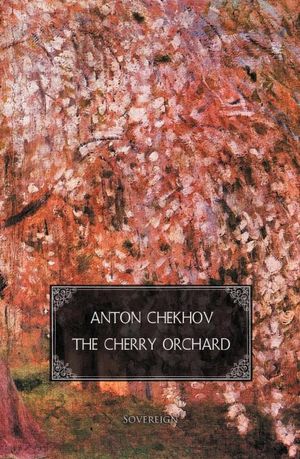
The Cherry Orchard - Anton Chekhov, Tom Murphy (Translator)

Rating: ★★★★
25/11/13


This play was an enjoyable read for me. It is about a once aristocratic family, now impoverished and forced to sell everything, including their beautiful cherry orchard, that seemed to be the main thing they cared about, the reason of their pride. Even though they were about to lose everything they owned, they were in some sort of denial because they didn't (or couldn't) do anything to solve that situation. And while this family was in decline, a new kind of rich people arose: the once serfs were making their own money and gaining their place in society. “New money”, like Rose DeWitt's stuck-up mother would say. Rich people in decline trying to save their social position can be really unpleasant. They are willing to do anything to maintain their status. However, this family just stayed there, doing nothing... Some friends gave them possible solutions for their problem, and they did nothing.

The characters are likable, each one in their own way. The main one is Lyubov, a widowed landowner that also lost a son. She's a mixture of different kind of emotions and apparently unwilling to let go the past (something I can relate to, very much). Her brother, Leonid, adds a comedy element that I always enjoy. This play can be funny, witty and also heartbreaking. It has several things to consider that makes it an interesting book to read.


viernes, 2 de enero de 2015

Hamlet - William Shakespeare


Rating: ★★★★★
28/12/13


A billion reviews. This book has been reviewed billions of times. So, I wonder, what can I say? Do I have anything new to say about this superb, outstanding play that every human being on Earth should read? I am guessing "no" is the proper answer. Yet, here I am. 

This is the most perfect tragedy of all times. A play full of brilliant insights on the human condition, about a young man that lacked all power of making decisions because he had major moral dilemmas that prevented him from actually doing something. Such a philosophically, emotionally, dasdasflly complex character.
This book has everything and it was written, well, a couple of centuries ago. But it is still one of the most brilliant works on human nature EVER.


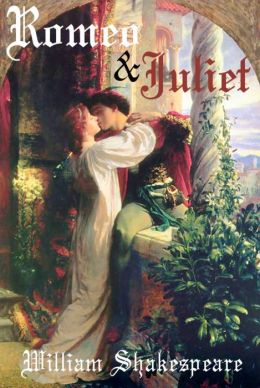
Romeo and Juliet - William Shakespeare


Rating: ★★
21/09/13


So, in the 16th century, 13-year-olds were able to fall in love and commit suicide, all in less than a week. Now, they get upset if they don't get the 1.000 likes they want on social networks. Newbies.

This is the greatest love story of all times. Yes, it happened in less than a month (and there are men that after 10 years of being in a relationship, still aren't ready to get married). I can't imagine what would have happened in a six-month marriage. “New home, a couple of kids –a challenge to mother nature but time's not important here. After weeks of fighting over little things, Romeo developed a drinking problem, Juliet was heavily depressed, the kids fell in love with their neighbors at a birthday party. Three deaths by stabbing and 6 months later, big divorce.” 
Either way, they were doomed. That's what happens when you rush into things.
I love Shakespeare. The man described love, hatred, all kinds of human miseries with such a beautiful, brilliant writing. He had an extraordinary way of exploring his characters' psyche. Hamlet, for instance? Only the greatest tragedy of all times. But Romeo and Juliet...
Am I such a romantic? No. Sometimes. Not sure. What about after reading this play? 
Sorry.