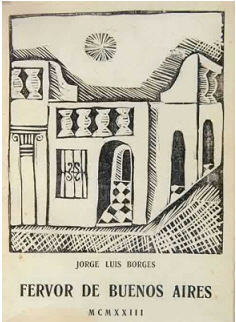
...
Mostrando entradas con la etiqueta argentina. Mostrar todas las entradas

sábado, 15 de julio de 2017

Luna de Enfrente: Cuaderno San Martín - Jorge Luis Borges

Rating: ★★★★
13/16/16

description

Luna de Enfrente: Cuaderno San Martin
Moon Across the Way (1925) and San Martín Copybook (1929) are the last two books that complete the poetic trilogy Borges had started with Fervor of Buenos Aires (1923).

There is a particular, tangible atmosphere that acts as a bond among those three collections, one that goes beyond the lyrical tone and elegance one may instantly perceive even after the first quick glance. Through the art of poetry (that Borges later on would keep cultivating, letting it become another part of his being, unfortunately not as renowned as his short stories), he combined everyday things with existential matters. Streets, the countryside, well-lighted patios, a city that is heard as if it were a verse; all elements that were used to deconstruct existence, allowing philosophical dilemmas to come to surface, thus merging a world of facts with a metaphysical realm.

description
description

description

After I read the last poem, my mind was plagued with certainties, half-truths and obstinate doubts. A timid hand closed the book as a sense of joy mixed with nostalgia welled up inside me.
Night has fallen and I await, with a wistful smile, I hope; I yearn for that melody to last until dawn.


description


* Photo credit: Book cover via Goodreads.


miércoles, 5 de abril de 2017

Carta abierta de un escritor a la Junta Militar - Rodolfo Walsh

Rating: A testimony that can't be rated.
24/03/17


March 24, 1976. A dictatorship started ruling Argentina; the era of kidnapping and torturing any enemy of the state had begun. Bodies vanishing into thin air. The following year, writer and journalist Rodolfo Walsh sent a letter (Open Letter From a Writer to the Military Junta) by post to the editorial departments of local newspapers and foreign press correspondents expressing his opinion. The next day, he was kidnapped and never seen again.

El primer aniversario de esta Junta Militar ha motivado un balance de la acción de gobierno en documentos y discursos oficiales, donde lo que ustedes llaman aciertos son errores, los que reconocen como errores son crímenes y lo que omiten son calamidades. [...]
Quince mil desaparecidos, diez mil presos, cuatro mil muertos, decenas de miles de desterrados son la cifra desnuda de ese terror.
Colmadas las cárceles ordinarias, crearon ustedes en las principales guarniciones del país virtuales campos de concentración donde no entra ningún juez, abogado, periodista, observador internacional. El secreto militar de los procedimientos, invocado como necesidad de la investigación, convierte a la mayoría de las detenciones en secuestros que permiten la tortura sin límite y el fusilamiento sin juicio. [...]
Estas son las reflexiones que en el primer aniversario de su infausto gobierno he querido hacer llegar a los miembros de esa Junta, sin esperanza de ser escuchado, con la certeza de ser perseguido, pero fiel al compromiso que asumí hace mucho tiempo de dar testimonio en momentos difíciles.
24 de marzo de 1977

*

The first anniversary of this Military Junta has brought about a year-end review of government operations in the form of official documents and speeches: what you call good decisions are mistakes, what you acknowledge as mistakes are crimes, and what you have left out entirely are disasters. [...]
Fifteen thousand missing, ten thousand prisoners, four thousand dead, tens of thousands in exile: these are the raw numbers of this terror.
Since the ordinary jails were filled to the brim, you created virtual concentration camps in the main garrisons of the country which judges, lawyers, journalists, and international observers, are all forbidden to enter. The military secrecy of what goes on inside, which you cite as a requirement for the purposes of investigation, means that the majority of the arrests turn into kidnappings that in turn allow for torture without limits and execution without trial. [...]
These are the thoughts I wanted to pass on to the members of this Junta on the first anniversary of your ill-fated government, with no hope of being heard, with the certainty of being persecuted, but faithful to the commitment I made a long time ago to bear witness during difficult times.
March 24, 1977


description

domingo, 26 de febrero de 2017

Un Signo en tu Sombra - Alejandra Pizarnik

Rating: ★★★
22/02/17

Buenos Aires, 1955.
The romanticism of youth? The sentimental noise, the affectionate supplication. A woman desperately, constantly asking for something, waiting.
One’s voice is not enough.

Buenos Aires, 2017.
A poem redolent of untamed ardor made my pride feel awkward. Words from which desperation emanates.
No, nothing will be begged.

Uncertainty over beseechment. Existential silence over the cloying response of rejection. A muffled scream over a visible earthquake.
No, nothing will be seen.

Yes, everything has been forgotten, except

description
*

description


* Translation by Yvette Siegert


description

jueves, 10 de noviembre de 2016

Dibaxu - Juan Gelman

Rating: ★★★★
03/11/16

This is a bilingual Ladino-Castellano poetry collection written by acclaimed Argentine poet Juan dibaxu, a Sephardic term that means “under”. The title already conveys the complex universe the reader may find under the veil of a seeming simplicity; a deluge of obstreperous feelings said in an undertone. The past, love, confusion, countless sensations, strong desires, empty spaces, a search for a homeland – roots with which I fail to identify, once more.
Gelman, published in 1994. He decided to call it
In this book, Gelman's poems first appear in Ladino and then in Spanish; I'll follow the same order, including the English translation afterwards.
XV
tu boz sta escura
di bezus qui a mí no dieras/
di bezus qui a mí no das/
la nochi es polvu dest'ixiliu/
*
tu voz está oscura
de besos que no me diste/
de besos que no me das/
la noche es polvo de este exilio/
*
your voice is dark
of kisses that you did not give to me/
of kisses that you do not give to me/
night is dust from this exile/

The act of revealing real emotions – an act often fraught with ineffable difficulty – never looked so simple. Gelman masterfully expresses in a few words, everything that sometimes requires numerous pages and that tangible concept of fleeting nature we call time; everything that emerges from the depths of love, regret,
shame.
XXIV
amarti es istu:
un avla qui va a dizer/
un arvulicu sin folyas
qui da solombra/
*
amarte es esto:
una palabra que está por decir/
un arbolito sin hojas
que da sombra/
*
loving you is this:
a word that is about to speak/
a small tree without leaves
that provides shade/

Through unique and recurring imagery and a naturally distinctive cadence, he places the reader inside his mind; our mind, that inhospitable region where dreams and yearnings continue to accumulate in secrecy, longing for emotional impetus. Concise lines that belong to a bigger picture, a fragmented reality; lines that are accompanied by the use of somewhat distracting slashes, part of the author's individual style.
X
dizis avlas cun árvulis
tenin folyas qui cantan
y páxarus
qui adjuntan sol/

tu silenziu
disparta
lus gritus
dil mundu/
*
dices palabras con árboles/
tienen hojas que cantan
y pájaros
que juntan sol/

tu silencio
despierta
los gritos
del mundo/
*
you say words with trees/
they have leaves that sing
and birds
that gather sun/

your silence
awakes
the cries
of the world/

Gelman's poetry reveals itself without any affectation; some things are open to interpretation but amid so much comforting frankness, they are so, so clear. He voices his thoughts with simple yet evocative metaphors and a pithy language which defies any traditional rule.
His thoughts, thus, are diaphanous as fire.

XXIX
…
pondrí mi spantu londji/
dibaxu dil pasadu/
qui arde
cayadu com'il sol/
*
…
pondré mi espanto lejos/
debajo del pasado/
que arde
callado como el sol/
*
…
i will set my fear afar/
underneath the past/
that burns
silent as the sun/


description


* Photo credit: Book cover via Goodreads.


martes, 20 de septiembre de 2016

En memoria de Paulina - Adolfo Bioy Casares

Rating: ★★★★
12/09/16

-Dante: Goodbye, dear master.
-Virgil: How come! What about Purgatory? And Paradise?
-Dante: For what! He who knew Hell does not have any interest in Purgatory. And regarding Paradise, he already knows it is the absence of hell.

-Dante: Adiós, dulce maestro.
-Virgilio: ¡Cómo! ¿Y el Purgatorio? ¿Y el Paraíso?
-Dante: ¡Para qué! Quien conoció el Infierno ya no tiene ningún interés en el Purgatorio. Y respecto al Paraíso, sabe que es la ausencia de infierno.


~ Marco Denevi, “A la salida del Infierno” (“At the gates of Hell”)

Last weekend, I've been reading (shocking!), ferociously, completely oblivious to time and eventually to the sudden hot weather; sudden and alarming, since the sun looked rather ominous, making me think about those summer days that will soon come, whose intense heat annually deprives me of the possibility of functioning on a basic human level. In any case, after pushing those abominable climatic thoughts away, I continued to read short stories written by Argentine authors. (Naturally, I read at a faster pace in Spanish; I found a couple of terms I wasn't familiar with, but they didn't slow down the process.) I revisited the multitudinous universe of one unique Jorge Luis Borges, I fondly remembered my journey with Julio Cortázar, I listened to Silvina Ocampo's disturbingly cryptic accounts, I took a nap by dint of Esteban Echeverría's poetry and dreamed about the world of gauchos through Ricardo Güiraldes' eyes, I woke up and became acquainted with Leopoldo Lugones' fantastic narratives and with Roberto Arlt's exceptional creativity, I found another gem by Uruguayan writer Horacio Quiroga, I ended up massively confused by Haroldo Conti's simplicity, I grew accustomed to Marco Denevi's playful approaches to extremely formal affairs, I saw a plethora of thoughts passing through Liliana Heker's mind, I joined Manuel Mujica Láinez on his search for the true nature of people, and I had the opportunity to savor again the ambrosial prose of Adolfo Bioy Casares.
This particular short story called “In memory of Paulina” symbolizes the tension between love and jealousy, as magic rationally steps into the characters' world.
Paulina me dijo: Me gusta el azul, me gustan las uvas, me gusta el hielo, me gustan las rosas, me gustan los caballos blancos. Yo comprendí que mi felicidad había empezado, porque en esas preferencias podía identificarme con Paulina...
Pensé también: En lo que me parezca a Paulina estoy a salvo. Veía (y aún hoy veo) la identificación con Paulina como la mejor posibilidad de mi ser, como el refugio en donde me libraría de mis defectos naturales, de la torpeza, de la negligencia, de la vanidad.

Paulina said to me: “I like blue, I like grapes, I like ice, I like roses, I like white horses.”  And I knew that my happiness had begun because these preferences of Paulina’s were also mine...
I also thought: “I am safe as long as I resemble Paulina.” I saw (and see even now) identification with Paulina as the best possibility for my own being, as the refuge in which I would be freed of my natural defects, of my obtuseness, my negligence, my vanity.

I often get lost in the world of foreign literature, unintentionally neglecting the treasures I have in my own land.


* Photo credit: Book cover via Goodreads.

domingo, 6 de marzo de 2016

Fervor de Buenos Aires - Jorge Luis Borges

Rating: ★★★★
29/02/16
Habré de levantar la vasta vida
que aún ahora es tu espejo:
cada mañana habré de reconstruirla.
(Ausencia)

I shall raise the wide life
that is still your mirror:
each morning I shall rebuild it.
(Absence)
Borges published this book in 1923. It was his first collection of poems, one that would not only represent an ode to the capital's nostalgic beauty, but also his first attempt at dealing with philosophical issues in the land of the uncertain. Of the impossible and the extreme. Lights of different colors; shadows of different shapes. A silent passion and the lyrical tone you would not expect from him. But perhaps you should.
I could relate to those kinds of poems, of course. The rest of them convey a closeness to a place that I would never be able to recognize. A devotion driven by some irresistible force that made everything seem rather foreign to me. However, many poems resonate with different meanings and emotions and thus have become part of my memory.
Inscripción en cualquier Sepulcro
No arriesgue el mármol temerario
gárrulas transgresiones al todopoder del olvido,
enumerando con prolijidad
el nombre, la opinión, los acontecimientos, la patria.
Tanto abalorio bien adjudicado está a la tiniebla
y el mármol no hable lo que callan los hombres.
Lo esencial de la vida fenecida
—la trémula esperanza,
el milagro implacable del dolor y el asombro del goce—
siempre perdurará.
Ciegamente reclama duración el alma arbitraria
cuando la tiene asegurada en vidas ajenas,
cuando tú mismo eres el espejo y la réplica
de quienes no alcanzaron tu tiempo
y otros serán (y son) tu inmortalidad en la tierra.

Inscription on any Tomb
Let not the rash marble risk
garrulous breaches of oblivion’s omnipotence,
in many words recalling
name, renown, events, birthplace.
All those glass jewels are best left in the dark.
Let not the marble say what men do not.
The essentials of the dead man’s life—
the trembling hope,
the implacable miracle of pain, the wonder of sensual delight—
will abide forever.
Blindly the willful soul asks for length of days
when its survival is assured by the lives of others,
when you yourself are the embodied continuance
of those who did not live into your time
and others will be (and are) your immortality on earth.

*

Afterglow
Siempre es conmovedor el ocaso
por indigente o charro que sea,
pero más conmovedor todavía
es aquel brillo desesperado y final
que herrumbra la llanura
cuando el sol último se ha hundido.
Nos duele sostener esa luz tirante y distinta,
esa alucinación que impone al espacio
el unánime miedo de la sombra
y que cesa de golpe
cuando notamos su falsía,
como cesan los sueños
cuando sabemos que soñamos.

Afterglow
Sunset is always disturbing
whether theatrical or muted,
but still more disturbing
is that last desperate glow
that turns the plain to rust
when on the horizon nothing is left
of the pomp and clamor of the setting sun.
How hard holding on to that light, so tautly drawn
and different,
that hallucination which the human fear of the dark
imposes on space
and which ceases at once
the moment we realize its falsity,
the way a dream is broken
the moment the sleeper knows he is dreaming.


* Photo credit: Book cover via Goodreads.


domingo, 27 de diciembre de 2015

Historia de la Noche - Jorge Luis Borges

Rating: ★★★★★
27/12/15
The aesthetic event is something as evident, as immediate, as indefinable as love, the taste of fruit, of water. We feel poetry as we feel the closeness of a woman, or as we feel a mountain or a bay. If we feel it immediately, why dilute it with other words, which no doubt will be weaker than our feelings?
JLB on poetry (1977)

All the knowledge of the world emerges from the intricate depths of his consciousness. He mastered
the art of language by nourishing his mind—since an early age—with all the works of men and women that evoke eternity. Because of the touch of ancient gods or the wish of a forgotten mirror, he became one of those men.
Yo temo ahora que el espejo encierre
El verdadero rostro de mi alma,
Lastimada de sombras y de culpas,
El que Dios ve y acaso ven los hombres.

Now I fear the mirror may disclose
The true visage of my soul,
Bruised by shadows and guilt,
The face God sees and perhaps men see too.
(from “El Espejo”, “The Mirror”)

Borges, the one that shattered his identity and left pieces of it inside the walls of the labyrinth, on the stairs of a library, hidden in the eyes of a tiger, within the heart of a woman that held him captive forever in the prison of rejection. The one that perfected the creative process of the short story, praising the transcendent melody of brevity over unnecessary length. The other Borges, the same, the one that beautifully crafted a poetry which encompasses all existence, every universe, all the seconds of infinity.
Sabía que el presente no es otra cosa
que una partícula fugaz del pasado
que estamos hechos de olvido

He knew the present is nothing but
a fleeting particle of the past
that we are made of oblivion
(from “G. A. Bürger”)

Poems that no one should fear. They are filled with the benign bruises of time, with mythological references that leads you to the search for truth, with magical symbols and music, longings and tigers, wistful love and forsaken dust, nostalgia that becomes a habit of the soul, dreams of the world that belong to us and to anyone, books and some night out of a thousand. Odes to Iceland, France, Japan, Alexandria, the sand.
Buenos Aires lies in an hourglass.
Caja de Música
Música del Japón. Avaramente
De la clepsidra se desprenden gotas
De lenta miel o de invisible oro
Que en el tiempo repiten una trama
Eterna y frágil, misteriosa y clara.
Temo que cada una sea la última.
Son un ayer que vuelve. ¿De qué templo,
De qué leve jardín en la montaña,
De qué vigilias ante un mar que ignoro,
De qué pudor de la melancolía,
De qué perdida y rescatada tarde,
Llegan a mí, su porvenir remoto?
No lo sabré. No importa. En esa música
Yo soy. Yo quiero ser. Yo me desangro.

Music Box
Music of Japan. Parsimoniously
from the water clock the drops unfold
in lazy honey or ethereal gold
that over time reiterates a weave
eternal, fragile, enigmatic, bright.
I fear that every one will be the last.
They are a yesterday come from the past.
But from what shrine, from what mountain’s slight
garden, what vigils by an unknown sea,
and from what modest melancholy, from
what lost and rediscovered afternoon
do they arrive at their far future: me?
Who knows? No matter. When I hear it play
I am. I want to be. I bleed away.

The book ends with a song to the night. Touching night. Dazzling night. Vindictive night that became the owner of his eyes. He was serene but I cannot forgive.
The night brings the sound of a distant bell. For whom the bell tolls? For Reality.
She pulls me away as I try to hold on to the poem I loved the most.
Las Causas
Los ponientes y las generaciones.
Los días y ninguno fue el primero.
La frescura del agua en la garganta
de Adán. El ordenado Paraíso.
El ojo descifrando la tiniebla.
El amor de los lobos en el alba.
La palabra. El hexámetro. El espejo.
La Torre de Babel y la soberbia.
…
Cada arabesco del calidoscopio.
Cada remordimiento y cada lágrima.
Se precisaron todas esas cosas
para que nuestras manos se encontraran.

The Causes
The sunsets and the generations
The days and none was first.
The freshness of water in Adam’s
Throat. Orderly paradise.
The eye deciphering the darkness.
The love of wolves at dawn.
The word. The hexameter. The mirror.
The Tower of Babel and pride.
…
Every arabesque in the kaleidoscope.
Each regret and each tear.
All those things were needed
So our hands could meet. *


* A much longer poem. It is still out there for you to find.
** Photo credit: Book cover via Goodreads.


sábado, 19 de septiembre de 2015

Una Suerte Pequeña - Claudia Piñeiro

Rating: ★★★★
19/09/15

I have always depended upon the kindness of strangers.
- Tennessee Williams, A Streetcar Named Desire (1947)


description

I did not know where I was standing until page sixty-seventy-something of this book called Una Suerte Pequeña (A Little Luck). That usually makes me feel rather uncomfortable. It is not that I want to know everything in page one—that was a lie, my literary anxiety demands me to know everything as I open the book, can't help it, I have a problem, you know it, I know it, let's move on—, but when a book starts slow, I tend to lose my interest in it. Judge me, be my guest. I will not lie to make myself look better. For that is an exhausting task. Anyway, this book starts slow.
Delightfully
slow.

It captivated me. It unapologetically captivated me. Claudia Piñeiro manages time as she pleases. She can do anything she wants with it. She walked, I followed. Sure, cursing, asking for more details, moments, names, demanding information to ease my doubts and put my brain on hold after imagining many hypothetical scenarios... but I followed.

She kept me asking for words, context. Solve the damn thing, who are they? What is going on? Give me something I can work with!
She delivered. I waited with the fake patience of a grown-up, a cool adult, a mature reader waiting for the story like a child staring at the Christmas tree the next morning. And she gave me everything.
This is a story of a woman, Mary Lohan or Marilé Lauría or María Elena Pujol. Three names, three places in life; one person. I saw her past, I saw her forming her own family. I saw her facing tragedy, rejection, losing everything she had. I saw her separated from the one she loved the most. Being surrounded by people and realizing, years after, that she really did not had anyone but social conventions and moral cliches. I saw her running away, punishing herself, reinventing herself. Finding the kindness of a stranger that would later defy even the limits of matter. I saw her contemplating her life, beholding...
the abyss that draws or repels in a single act.

El abismo que atrae y repele en un mismo acto. (30)

...and asking to herself the question that every human being asks at least once, and might be afraid of finding the answer.
¿Fui feliz alguna vez?

Have I ever been happy? (194)

I saw me. I found a bit of me in her. In María Elena, in Marilé, in Mary. The unsettling emotion fed by the connection between the character and me.
And I know my answer.
Así sucede con los grandes personajes de la literatura, siempre encontramos un puto, una arista, un gesto donde podemos ser ellos. O al menos podemos ponernos en su lugar.

That's what happens with great characters in literature, we always find a point, a side, a gesture where we can be them. Or at least, we can put ourselves in their place. (179)

Like I said before, Piñeiro knows what to share and when. Her words drag you out of reality and make you plunge in the deep sea of her story. Her writing possesses the simplicity that conveys a whole world. The book is presented with such an original structure that you have no other choice than to suck it up, find patience and savor every word. It will not be hard. You will not be able to leave the story until it is finished. All puzzle pieces in their place. All the clues you recollected during this journey, ready to solve the mystery, to ease the guilt, to start again. Once you open the book, you are done...

I was done. And I have cried. Twice. This book made me cry twice. I know when. I know that I was listening to the radio and I realized the presence of some tear while “(Sittin' on) The Dock of the Bay” was playing (funny fate, if there is such a thing). I remember the pages. I wrote on them. I branded them. They are not mine but I feel them close. Because the writer talked to me. The echo of her voice resonated from my brain to my eyes. She talked to me. I think I would like to answer. To her. To anybody willing to listen. Quite rare these days, don't you think? Or maybe not, and I just did not have too much luck.

How many damaged people are wandering through the vastness of this Earth, longing for someone that would help them repair things, before it is all broken for good? Many people surrounded by the loud silence of loneliness, recreating in their minds a chat with a stranger. At a coffee shop. At a Japanese restaurant. At a bookshop. A conversation that leads you to a future friend. A partner. The last person you could see in your life. Some sort of happiness. A little crumb that resembles happiness. The warmth of resemblance. Redemption. Something.

No. Some things cannot be repaired only by us. No matter how much we wish they were. To find a peaceful place to fix a damaged existence, to overcome the distrust that defines this world in order to find that place in the kindness of a stranger... No, my friend, that is not a little luck.
Not a little luck, at all.


~ Traducción ~

Rating: ★★★★
19/09/15


Siempre he dependido de la amabilidad de los extraños
- Tennessee Williams, Un Tranvía Llamado Deseo (1947)

description

No sabía donde estaba parada, hasta la página sesenta, setenta y algo de este libro llamado Una Suerte Pequeña. Eso es algo que, por lo general me hace sentir un poco incómoda. No es que yo quiera saber todo en la primera página (eso, ahí, fue una mentira, mi ansiedad literaria exige que sepa todo al abrir el libro; no puedo evitarlo, tengo un problema, vos lo sabes, yo lo sé, sigamos), pero cuando un libro comienza lento, tiendo a perder mi interés en él. Juzguenmé, adelante. No me voy a disfrazar de algo que no soy para verme mejor; eso sería una tarea agotadora... Volviendo al tema, este libro comienza lento.
Deliciosamente
lento.
Y me cautivó. Sin pedir permiso, sin disculpas, me cautivó. Claudia Piñeiro logra manejar el tiempo como lo desea. Puede hacer lo que quiera con él. Ella caminó, yo seguí. Claro, maldiciendo, puteando, pidiendo más detalles, momentos, nombres, exigiendo información para aliviar mis dudas y poner mi cerebro en recreo después de imaginar varios escenarios, hipótesis, conclusiones... pero la seguí.

Ella me mantuvo pidiendo por más palabras, contexto, algo. Resolveme algo, ¿quiénes son? 
¿Qué está pasando? ¡Dame algo con lo que pueda hacer ALGO!

Ella entregó. Esperé con la paciencia falsa de un adulto, un adulto que se hace el interesante, un lector maduro esperando el desarrollo de la historia como un niño ante el arbolito de Navidad en la mañana siguiente. Cautiva. Ella me dio todo.
Esta es la historia de una mujer, María Lohan o Marilé Lauría, o María Elena Pujol. Tres nombres, tres lugares de la vida en un mundo. Vi su pasado, la vi formar su familia. La vi frente a la tragedia, frente al rechazo, perdiendo todo lo que tenía. La vi separada de la persona que ella más amaba. Rodeado de gente y para, años después, darse cuenta, de que realmente no tenía más que convenciones sociales, frases hechas. La vi huir, la vi castigándose, reinventándose a sí misma. La vi encontrando la amabilidad de un extraño que llegó a desafiar el límite de la materia. La vi contemplando su vida, observando...
...el abismo que atrae o repele en un solo acto. (30)

...y haciéndose la pregunta que todo ser humano se pregunta al menos una vez en la vida, sin saber si está preparado para recibir la respuesta.
¿Alguna vez he sido feliz? (194).

Me vi. Me vi un poco en ella. En María Elena, en Marilé, en Mary. Esa sensación inquietante alimentada por la conexión entre el personaje y yo.
Y tengo mi respuesta.
Eso es lo que sucede con los grandes personajes de la literatura, siempre encontramos un punto, un lado, un gesto en el que podemos ser ellos. O por lo menos, podemos ponernos en su lugar. (179)

Como dije antes, Piñeiro sabe qué compartir y cuándo. Sus palabras te toman del brazo y te sacan fuera de la realidad, para sumergirte en las aguas profundas de su historia. Su escritura posee la sencillez que transmite todo un mundo. El libro se presenta con una estructura tan original que no tenés más remedio que aguantarte, encontrar la paciencia necesaria y saborear cada palabra. No va a ser difícil. Porque no vas a ser capaz de salir de la historia hasta que esté terminada. Todas las piezas del rompecabezas en su lugar. Todas las pistas que recolectaste durante el viaje, listas para resolver el misterio, para aliviar la culpa, para empezar de nuevo. Una vez que abrís el libro, fuiste...

Fui. Y lloré. Dos veces. Este libro me hizo llorar dos veces. Yo sé cuándo. Sé que estaba escuchando la radio y me di cuenta de la presencia de alguna lágrima mientras sonaba “(Sittin' on) The dock of the bay” (destino cómico, si es que existe). Me acuerdo de esas páginas. Escribí en ellas. Las marqué. No son mías, pero las siento cerca. Porque la escritora me habló. El eco de su voz resonó desde mi cerebro hacia los ojos. Ella me habló. Creo que me gustaría responder. A ella. A alguien dispuesto a escuchar. Algo raro en estos días, ¿no? O tal vez no, y es que, en verdad, no tuve demasiada suerte.
¿Cuántas personas dañadas andan vagando por la inmensidad de esta tierra, anhelando que alguien les ayude a reparar, antes de que todo se rompa para siempre? Tantas personas rodeadas por el silencio estrepitoso de la soledad, recreando en sus mentes una charla con un extraño. En un café. En un restaurante japonés. En una librería. Una conversación que puede llevar hacia un futuro amigo. Un compañero. La última persona que podrías ver en tu vida. Algún tipo de felicidad. Alguna migaja de algo parecido a la felicidad. La calidez del parecido. Redención. Algo.

Hay cosas que solos no podemos reparar. Sin importar cuánto lo deseemos.
Encontrar un lugar pacífico donde podamos arreglar una existencia dañada, vencer la desconfianza propia de este mundo para dar con ese lugar en la amabilidad de un extraño. No, eso no es una suerte pequeña.
No es una suerte pequeña, en lo absoluto.


* Photo credit: Book cover via Goodreads.
Thinkstock Photos Chicos via Clarín


domingo, 6 de septiembre de 2015

Lo que el Modelo se Llevó: Todo lo que Perdimos en la Década Ganada - Nicolás Lucca

Rating: ★★★★
07/09/15

The sense of belonging is inherent to human nature. We look for it every time. Even when we say we are such rebels that we do not care about it, that we do not need that and we are our own island. I have said things like that and I lied to myself every time. I have never met anyone completely alone and happy. Well, that is not such an indicator since I haven't met a lot of people. I am more of a recluse at home with books near me, coffee always ready to heat up and crumbs of pizza on my couch thanks to Saturday nights movie marathons (yeah, I am the most popular gal in town). But still, I haven't met that kind of people.


Anyway, that concept came to mind when I started reading this book by Argentine journalist Nicolás Lucca. Why? Because the other day, I found myself surrounded by people who support the current administration of my country, that being the Kirchnerist regime, which party, Frente Para la Victoria (Front for Victory, FPV) rules since 2003. The little criterion I have left allows me to question many methods and acts that FPV has done during these “década ganada” (a victorious decade; literally, a won decade) as they like to call it. So no, I cannot be a Kirchnerist. I cannot be any -ist, since the moment you start identifying yourself so much with a politician or any mortal like you, you become a fanatic whose perspective and objectivity get lost in the face of your idol. 

However, while I was in that group, surrounded by those fervent admirers of the government, I did wish I was one of them. That disturbing thought finds its roots in my weariness. I am tired. It is certainly exhausting to be in a fight all the time. Because that is the thing with fanatics: you cannot talk to them. It has been declared a high-risk sport in here. There is no possibility of a debate. You have to be in defensive position, all the time. And even worse, the division is so deep in our society (despite the opinion of some journalists that selflessly deny the crack, the social rift—something I also mentioned in El Relato Peronista review—) that intolerance is also present in a non-Kirchnerist person, that is, in a person that criticizes the little respect that the ruling party has for the opinion of others. Always justifying yourself, denying unpatriotic attitudes, a lack of acknowledgement of our great sovereignty and human rights policies, denying the invention of embezzlement cases—because this is the most transparent government of the last decades—and especially denying any involvement in the last dictatorship, no matter your age. I felt the urge of belonging to that Kirchnerist group. I wanted to see the fictitious reality they have been yapping about for years. I had the need of being a brainwashed follower that only sees a shiny rainbow with puppies singing “Don't Worry, be Happy/Marcha Peronista” over it. That feeling lasted a couple of minutes; reality came back to slap me in the face with no mercy. Yet, the problem is that it existed. I felt it. I wanted to sell my soul to La Cámpora (the Kirchnerist Youth movement) and be happy and proud and national and popular. And, metaphorical speaking, blind.


La década kichnerista ha transcurrido en una permanente independencia entre lo que se dice, lo que se hace y el cómo se hace.
The Kirchnerist decade has passed through a permanent independence among what it is said, what it is done and how it is done. (25)

description
This book is about the last twelve years of Argentine politics under the Kirchnerist administration, plus many references about the social and political context of previous years. How Former President Néstor Kirchner arrived to that position, his political past and same thing with his wife, Cristina Fernández, current President of this country. There is a lot of context to absorb this huge amount of information. Or try to absorb. Because every situation, every detail, everything is just too surreal. Too ours. Too argento, lads.

After the remarkable introduction written by film and t.v. director Juan José Campanella, comes Lucca's first chapter called “Bienvenidos al Modelo”, the initial contact with Kirchnerism. In a couple of pages, you will get the main idea of such a contradictory administration which base is purely a demagogic speech that tries to find the guilty ones when something goes wrong. Ironically, those offenders never belong to Kirchnerism: newspapers, companies, the agricultural sector, the greedy middle class that contributes with piles of money—through high taxes that does not match the lousy public services we have—later used by the government according to the whim of the time, the U.S., the IS, invisible yet very destabilizing forces that use Jedis' lightsabers to overthrow a democratic government that makes no consequence for the rest of the civilized world. Except the countries buying the south of our country in the name of sovereignty, a couple of Chinese working in Argentine soil,under their laws and with unknown benefits for us, the even more democratic Venezuelan administration that has the same ability to look for people to blame for their own ineptitude and a close relationship with the Iranian government to which our current President and staff gave the AMIA bombing suspects on a silver platter in exchange of trade and leaving 85 victims in oblivion.

Through the eight chapters of this book, you will find out about the truth behind the populist speech.

descriptionThe real numbers, the real hunger, the real responsible of some of our tragedies that could have been avoided if politicians in charge were not such a big pile of corrupt bastards spending money where it is not needed and putting the rest in their bank accounts. The real reason why we cannot reach all our potential, why we have so many social plans and State assistance if we have a strong and patriotic economy that Germans would envy. And, secretly, I think they already do... Pack your bags and get on the first Aerolíneas Argentinas plane you see, Mrs. Merkel! You are invited to come and copy our formidable politics based on empty words, fake numbers, assistance instead of decent work (because that would imply well-prepared citizens that can make decisions sans clientelism) and city services that had been attending the "subsidy party" for too long, creating the feeling we live in More's Utopia when we are actually in Collins' District 12. Just make sure no blonde is inside the cockpit, Ma'am. (Yeah, only Argentines can get that reference.)

This book also reflects the fact that the past can be chosen. There is a chapter called “Relato Derecho y Humano” that depicts how the Kirchners invented themselves a past of patriotic fights against the dictatorship of the time. Two innocent, soulful lawyers resisting one of the darkest periods of our history. Laws, convictions, persecutions, a sense of justice and a strong desire for fighting for it. That inspirational story would win the Golden Sarasa Award, no doubt, since it is basically a lie. The Kirchners were safely making money in the real estate industry while some of their colleagues were presenting habeas corpus in favor of people persecuted for political reasons in a time where you could not raise your voice against the de facto government without dreadful consequences.
However, the lie has been ingrained. The legendary past of those two politicians has come to stay. Even though it is so easy to check, kirchnerists like to repeat that idea to themselves, over and over. And over. There is a chapter solely dedicated to describe these specimens that sometimes receive something in exchange of their obsequiousness and other times—and for the majority represented by those poor devils that suffer like the rest of us—receive nothing, for they truly believe the tale (something that makes me lose faith in us as a normal society and in all humanity, for that matter). Yes, a true gem. Just like the passages that portray the unique relationship between Kirchnerism and justice. You see, real justice is seen mainly when it speaks in favor of any situation the Kirchnerist administration is going through. But, any verdict that opposes their patriotic desires is perceived as a decision that intends to hide the evident pressure of corporatism, the evil hegemonic forces represented by a newspaper, the dreadful and neoliberal characters of the '90s (like most Kirchnerists were) that want to take our humble nation back to those dark ages.
Yes, that actually happens. No, I wish I was exaggerating. For they are the majority, they represent what every single Argentine wants and needs, and they feel democracy is the ability of ridiculing and crushing the minority while sketching their sworn declarations to disguise everything they own thanks to the money they stole from their people (Kirchnerist or not) as they tell to that same people that a redistribution of wealth is needed so they should not be so greedy as to want to have a dollar to pay for whatever the hell they want. All in the name of democracy.
No, I wish I was exaggerating.
...nadie explica por qué más democracia debe implicar menos república, si ambos conceptos son iguales de esenciales para la existencia del Estado occidental moderno.

...nobody explains why democracy must involve less republic, if both concepts are equally essential for the existence of the modern Western state. (209)

In terms of writing, Lucca's is certainly remarkable. He is not the kind of writer that uses big, fancy words to explain what it is already so difficult to explain. There are very few technicalities. He manages to use a colloquial language without underestimate the reader. Slang is the keyword. A whole political report through a smart and familiar language; you cannot ask for more. It is like reading the witty thoughts of a well-prepared journalist lying in a couch with a cup of coffee and a restless mind.
Humor is omnipresent. And it is the main element that helps you finish those passages about numbers and details that also build a necessary context. Sure, sometimes, I felt like it was maybe, perhaps, possibly, a bit too much. There are ideas that led me to a few déjà vu experiences since I read them a couple of times with similar words. Some metaphors, comparisons and similar techniques to say something, that made me think to myself: “Okay, Mr. Lucca, say it already”. Still, when he reached Seriousness Avenue where those aforementioned techniques were absent, I missed them. And so on, and so on. (The first man that even hints at the “Oh well, you're a woman” explanation, gets a thousand copies of The Alchemist. Unless you liked it.) Clever writing is something that I always look for and I do not see frequently. And the fact that a person can combine wit and politics in a book without sounding like Kenny Bania is already an impressive task. So I am more than grateful, not only for the good time I had reading it, but mostly for the great deal of information and clarifications I have now. Sweet words armed with fake ideology cannot hide cold hard facts.

So, Argentines of the world, people that enjoy reading about Argentine history and are familiar with our unique argento language, this is a book you should not miss.
And I know. I know how these rambling thoughts began. For a moment, I wanted to be part of the Kirchnerist perfection that not even Walt Disney could have imagined. Let's just stay in reality, surrounded by tangible things and devastating numbers and everything that actually exists for us and almost a whole country. Surrounded by truth. Because in this bleak landscape with no visible exit in the short run, in this real place lies truth. Something that even the most hardcore Kirchnerist will have to eventually face when the Won Decade Building crumbles in front of his national and popular eyes, while he, in silence, of course, thinks about the next political conversion.
Lucca ends his book expressing that he does not know if he should keep dreaming about a great—well, a fine... oh, let's face it, a humanly acceptable—country, or wake up and make it come true. I agree. A lot of us are in the same spot. I would like to leave lala-warm-fuzzy land and make it real. To release the hand of Hope and stop the torment in the most Nietzschean way possible. In theory, Hope is a magnificent resource. In literature, a poetically sublime concept. But it should end, someday. It should become reality, at some point. That depends on you know who. Even a weird-looking smiling cat tells it better. If you do not care much about where you want to go, then it does not matter which way you go.
We know what we need, we know what to change. We know what to do. So...

~ Traducción ~


Rating: ★★★★
07/09/15

El sentido de pertenencia es inherente a la naturaleza humana. Lo buscamos todo el tiempo. Incluso cuando decimos que somos semejantes rebeldes que no nos preocupamos por eso, que no lo necesitamos y somos nuestra propia isla. He dicho cosas así y me mentí a mí misma, cada vez. Nunca conocí a alguien completamente solo y feliz. Bueno, no, eso no es un gran indicador ya que no he conocido montones de gente. Soy más como una reclusa en casa con libros cerca, café siempre listo para calentar y migas de pizza en el sofá gracias a los maratones de películas de sábado por la noche (sí, soy la piba más popular de la ciudad). Pero aún así, no he conocido a ese tipo de personas.

En fin, ese concepto me vino a la mente cuando empecé a leer este libro del periodista argentino Nicolás Lucca. ¿Por qué? Porque, el otro día, me encontré rodeada de personas que apoyan la actual administración de mi país: el régimen kirchnerista, cuyo partido, Frente Para la Victoria (FPV) gobierna desde 2003. El pequeño criterio que me queda me permite cuestionar varios métodos y actos que el FPV ha hecho durante esta década ganada, como les gusta llamarla. Así que no, no puedo ser kirchnerista. No puedo ser cualquier -ista, ya que desde el momento en que empezás a identificarte tanto con un político o, en realidad, cualquier mortal como vos, te convertís en un fanático cuya perspectiva y objetividad se pierden en la cara de su ídolo.
Sin embargo, mientras yo estaba en ese grupo, rodeada de esos fervientes admiradores del gobierno, realmente quise ser una de ellos. Ese pensamiento inquietante encuentra sus raíces en mi cansancio. Estoy cansada. Sin duda, es agotador estar en pelea todo el tiempo. Porque ese es el tema con los fanáticos: no se puede hablar con ellos. Es un deporte de alto riesgo por estas tierras. No hay posibilidad de debate. Tenés que estar a la defensiva, todo el tiempo. Y lo que es peor, es tal la división en nuestra sociedad (aunque algún que otro periodista niegue desinteresadamente lo que hace rato conocemos como la grieta —algo sobre lo cual también se escribió en la reseña de El Relato Peronista—) que esa intolerancia también es propia de quien no es kirchnerista, o sea, de quien critica el poco respeto a la opinión ajena que tiene el oficialismo. Uno siempre tiene que estar justificándose, negando actitudes antipatriotas, la falta de reconocimiento de nuestra gran soberanía y las políticas de derechos humanos, negando la invención de los casos de corrupción —porque este es el gobierno más transparente de las últimas décadas— y especialmente negando cualquier participación en la última dictadura, sin importar tu edad. Sentí la necesidad de pertenecer a ese grupo. Yo quería ver la realidad ficticia que han estado ladrando durante años. Tuve la necesidad de ser una seguidora con el cerebro lavado que sólo ve un arco iris brillante con cachorritos cantando "No te Preocupes, sé Feliz/Marcha Peronista" sobre él. Esa sensación duró un par de minutos; la realidad volvió a mí para cachetearme sin piedad. Sin embargo, el tema es que existió. Lo sentí. Quise vender mi alma a La Cámpora (el movimiento de la juventud kirchnerista) y ser feliz y orgullosa y nacional y popular. Y, metafóricamente hablando, ciega.

La década kirchnerista ha pasado a través de una independencia permanente entre lo que se dice, lo que se hace y cómo se hace. (25)

descriptionEste libro trata sobre los últimos doce años de la política argentina durante el gobierno kirchnerista , además de varias referencias sobre el contexto social y político de los años anteriores que nos llevaron adonde estamos. Trata sobre cómo el ex presidente Néstor Kirchner llegó a tal posición, su pasado político y lo mismo con su esposa, Cristina Fernández, actual presidente de este país. Hay mucho contexto para absorber esta enorme cantidad de información. O tratar de absorber. Porque cada situación, cada detalle, todo es demasiado surrealista. Demasiado nuestro. Demasiado argento, muchachos.

Después de la notable introducción escrita por el director de cine y televisión, Juan José Campanella, viene el primer capítulo que Lucca llamó "Bienvenidos al Modelo"; el contacto inicial con el kirchnerismo. En un par de páginas, obtenés la idea principal de una administración contradictoria cuya base es simplemente un discurso demagógico que trata de encontrar a los culpables cuando algo va mal. Irónicamente, esos responsables nunca pertenecen al kirchnerismo: son diarios, empresas, el sector agrícola, la clase media avarienta que contribuye con montones de dinero (a través de los altos impuestos que no se corresponden con los pésimos servicios públicos que tenemos) usado ​​más tarde por el gobierno de acuerdo al capricho del momento, los EE.UU., el Estado Islámico, fuerzas invisibles pero muy desestabilizadoras que con los sables de luz de los Jedis intentan derribar un gobierno democrático que no repercute en lo más mínimo para el resto del mundo civilizado. Excepto los países que compran el sur de nuestro país en nombre de la soberanía, un par de chinos que trabajan en suelo argentino bajo sus propias leyes y con beneficio aún desconocido para nosotros, el aún más democrático gobierno venezolano que tiene la misma capacidad de buscar a los culpables de su propia ineptitud y esa estrecha relación con el gobierno iraní al que nuestra Presidencia de la Nación le cedió en bandeja a los sospechosos del atentado a la AMIA a cambio de comercio y dejar a 85 víctimas en el olvido.

A través de los ocho capítulos de este libro, te vas a enterar de la verdad detrás del discurso populista.
description

Los números reales, el hambre real, los responsables reales de algunas de las tragedias que se podrían haber evitado si los políticos en cuestión no fueran una gran pila de corruptos que gastan plata donde no es necesario y ponen el resto en sus cuentas bancarias. Te vas a enterar sobre la verdadera razón por la que no podemos alcanzar nuestro potencial, por qué tenemos tantos planes sociales y asistencia del Estado si tenemos una economía fuerte y patriótica que los alemanes envidiarían. Y, en secreto, creo que ya lo hacen... Dale, Merkel, hacé las valijas y agarrate el primer avión de Aerolíneas que veas. Estás invitada a venir e imitar nuestra política formidable basada en palabras vacías, números falsos, asistencia en lugar de trabajo digno (porque eso implicaría ciudadanos bien preparados que puedan tomar decisiones sin convertirse en rehenes del clientelismo) y servicios públicos que estuvieron concurriendo a la fiesta del subsidio durante mucho tiempo, creando la sensación de que vivimos en la Utopía de Moro cuando estamos en el Distrito 12 de Collins. Nomás asegurate de que ninguna rubia esté en la cabina.

Este libro también refleja el hecho de que el pasado puede ser elegido. Hay un capítulo llamado "Relato Derecho y Humano" que describe cómo los Kirchner se inventaron un pasado de luchas patrióticas contra la dictadura de la época. Dos conmovedores e inocentes abogados resistiendo uno de los períodos más oscuros de nuestra historia. Leyes, convicciones, persecuciones, un sentido de la justicia y un fuerte deseo de luchar por ella. Esa historia inspiradora que ganaría de una el Premio Sarasa de Oro ya que todo es básicamente una mentira. Los Kirchner estaban haciendo dinero en la tranquilidad de la compra de propiedades, mientras que algunos de sus colegas estaban presentando hábeas corpus en favor de perseguidos políticos en un momento en que no se podía levantar una voz contraria sin ligarla.
Sin embargo, la mentira se ha arraigado. El pasado legendario del matrimonio ha llegado para quedarse. A pesar de que es tan fácil de comprobar, a los kirchneristas les gusta repetirse esa idea, una y otra vez. Hay un capítulo exclusivamente dedicado a describir a estos especímenes que a veces reciben algo a cambio de su obsecuencia y, otras veces —y la mayoría representada por esos pobres diablos que sufren como el resto de nosotros— reciben nada, porque ellos realmente creen en el relato (algo que me hace perder la fe en nosotros como una sociedad medianamente normal y en toda la humanidad, de igual manera). Sí, una verdadera joyita. Al igual que los pasajes que retratan la relación única entre el kirchnerismo y la justicia. O sea, la verdadera justicia se observa principalmente cuando se habla a favor de cualquier situación que la administración kirchnerista esté atravesando. No obstante, cualquier sentencia que se oponga a sus deseos patrióticos, se percibe como una medida que tiene la intención de ocultar la evidente presión del corporativismo, de las fuerzas hegemónicas del mal representadas por un diario, de los espantosos y neoliberales personajes de los 90 (tiempo al que perteneció la mayoría de los kirchneristas) que quieren llevar nuestra humilde nación de vuelta a esos años oscuros.
Sí, esto pasa. No, quisiera estar exagerando. Porque ellos son la mayoría, ellos representan lo que quiere y necesita cada argentino, y sienten que la democracia es la posibilidad de ridiculizar y aplastar a la minoría mientras dibujan sus declaraciones juradas para disfrazar todo lo que tienen gracias a la plata que le robaron a su pueblo (kirchnerista o no), ese mismo pueblo al que le dicen que se necesita una redistribución de la riqueza, por lo que no deben ser tan angurrientos como para querer tener un peso para disponer como quieran. Todo en nombre de la democracia.
No, quisiera estar exagerando.
...nadie explica por qué la democracia debe implicar menos república, si ambos conceptos son igualmente esenciales para la existencia del Estado moderno occidental. (209)
En cuanto a la escritura de Lucca, es ciertamente notable. Él no es el tipo de escritor que utiliza palabras pretenciosas para explicar lo que ya es tan difícil de explicar. Hay muy pocos tecnicismos. Se las arregla para utilizar un lenguaje coloquial sin subestimar al lector. Lunfardo es la palabra clave. Toda una historia política en un lenguaje inteligente y a la vez, familiar; no podés pedir más. Es como leer los pensamientos ingeniosos de un periodista bien preparado, acostado en un sofá con una taza de café y una mente inquieta.
El humor es omnipresente. Y es el elemento principal que te ayuda a terminar esos párrafos acerca de números y detalles que también hacen a un contexto necesario. Ponele, que a veces, me sentí como que era tal vez, quizás, posiblemente, un poco demasiado. Hay ideas que me llevaron a algún que otro déjà vu, por haberlas leído un par de veces con palabras similares. Algunas metáforas, comparaciones y técnicas similares para decir algo que me hicieron pensar: "Bueno, señor Lucca, dígalo de una vez". Sin embargo, cuando el autor llegó a la Avenida Seriedad en la que las técnicas antes mencionadas estuvieron ausentes, las extrañé. Y todo así. (El primer caballero que tire como explicación "Bué, sos mujer", se gana mil ejemplares de El Alquimista. A no ser que le haya gustado.)
La escritura inteligente es algo que siempre busco y no veo con frecuencia. El hecho de que una persona puede combinar el ingenio y la política en un libro sin sonar como Kenny Bania ya es una tarea que impresiona. Así que estoy más que agradecida, no sólo por el buen rato que pasé mientras leía, sino por la gran cantidad de información y aclaraciones que tengo ahora. Palabras dulces armadas de ideología falsa no pueden ocultar hechos concretos.

Así que, argentinos del mundo, personas que disfrutan de la lectura de la historia argentina y están familiarizados con nuestro lenguaje, único en su especie, este es un libro que no deben perderse.
Y ya sé. Ya sé cómo empezó esta perorata. Por un momento, quise ser parte de la perfección kirchnerista que ni siquiera Walt Disney podría haber imaginado. Pero quedémosnos en la realidad, rodeados de cosas tangibles y números devastadores y todo lo que existe en sí, para nosotros y para casi todo un país. Rodeados de verdad. Porque en este paisaje desolador sin salida visible a corto plazo, en este lugar real, se encuentra la verdad. Algo que incluso el kirchnerista más acérrimo tendrá que enfrentarse eventualmente, cuando el Década Ganada Building se desmorone ante sus ojos nacionales y populares, mientras que él, en silencio, obvio, se encuentre pensando en la próxima camaleónica conversión política.
Lucca termina su libro expresando que él no sabe si debe seguir soñando con un gran (o sea, un buen... seamos sinceros, un humanamente aceptable) país, o despertar y hacerlo realidad. Estoy de acuerdo. Muchos estamos en la misma, cada uno desde el lugar que tiene o puede o le encajaron de una. Me gustaría dejar el mundo de fantasías animadas de ayer y hoy y hacerlo realidad. Soltarle la mano a la Esperanza y detener el tormento de la manera más nietzscheana posible. En teoría, la esperanza es un recurso magnífico. En la literatura, un concepto poéticamente sublime. Pero debería acabarse, algún día. Dejar de ser deseo para convertirse en realidad, en algún momento.
Sabés de quién depende. Hasta un bizarro gato de sonrisa perturbante lo dice mejor. Si no sabés o no te importa demasiado adónde ir, da lo mismo qué camino elegir.
Sabemos lo que necesitamos, sabemos lo que hay que cambiar. Sabemos qué hacer. Entonces...


* Photo credit: Book cover via Goodreads.
"El obelisco y el arco iris" / Juan José Braun via Foto Revista.
Hombre en La Carbonilla, Buenos Aires / Reuters via El Confidencial