...

domingo, 28 de febrero de 2016

The Stranger: Selected Poetry - Alexander Blok, Andrey Kneller (Translator)

Rating: 
18/02/16
A moon is shining somewhere? Somewhere there's a sun?
(July 1898)


My third Russian lyrical poet of the year. His poetry—an ode to symbolism—includes a wide and varied range of themes and bold experimentations concerning rhymes and structures; a fascinating

display of emotions, wit and creativity.
It was a pleasure to contemplate some particular verses which ooze otherworldly beauty and strongly familiar impressions. His language oscillates between an exceptional lyricism and a harsher tone used to depict evocative images of a more violent nature, often when portraying the political scenario of his time.
Nothing here could be labeled as conventional, something that any reader would find refreshing, to say the least.

This collection offers many sides of Blok.
A poet engaging in an impossible quest. Stubbornly, inevitably.
I yearn to live a life of meaning:
Make every thing – immortalized,
Make all the formal – humanized,
Bring non-existent – into being!
(February 5, 1914)

A poet singing to harmony, to differences; to the pleasant resemblances and irreconcilable ideas, the intimacy and a necessary distance; everything that entails a conversation, a relationship, a marriage, a life. There are a couple of verses that I still hear from some obscure corner of my mind. A long poem and one of my favorites of this collection.
Because you have seen all the secrets I hide.
Because we are bound by secrets and night.
(Guardian Angel)

A poet... getting drunk? A couple of poems were dedicated to an apparently fresh and vivacious beverage that might be the cause of outward reveling or undying mortification: wine. Its incomparable taste, appealing color and the sensations that followed the empty bottle. I don't drink, so there I was, like the eternal designated driver that I am, with some coffee first, some water later, reading about this remarkable poet nailed to the tavern counter... drunk already, but not through, composing a melody to the night and to his soul, his hopeless soul... drunk and dazed.

A poet, no longer a stranger, that left many of us overawed by the unparalleled magnificence of his writing, something that Andrey Kneller was able to convey, once more, with admirable accuracy and elegance.
It’s dark, despite the moon above.
For many, life may turn out better, -
Inside my soul, the spring of love
Will not replace the stormy weather.
The night’s spread out in the street,
And to my spirit’s muted stare,
That’s soaked in poison, hot and sweet,
It answers with a deathly glare.
I try to keep my passions down,
Out in the cold and dawning mist,
I wander, lost among the crowd,
Engrossed, with thoughts of only this:
It’s dark, despite the moon above.
For many, life may turn out better, -
Inside my soul, the spring of love
Will not replace the stormy weather.
(January 1898)

There is a song on every page that speaks of the ancient night. Of unfading passion and forgettable actions. Of ephemeral infatuation and haunting decisions. Of forgiveness and hopeless evenings. The pale glow of a search for meaning. The opportunities we might have lost. A fear that lingers. The people on the streets we ignored today. The inspiration to which we have relinquished. The memories we cherish, that overwhelm us; the ones we wish we had. Words that soothe and harm. Silence that warms and forgets. Strangers waiting at restaurants while the setting sun burns the sky. The thoughts we choose not to share as time, devoid of any emotion, denies a second chance. The things that were never meant to be owned but we are reluctant to let go. The loss of the nonexistent. The indifference toward existence. The people we see. The people we miss.
The ones we'll never be.


The Saint of Mt. Koya - Kyōka Izumi

Rating: 
16/02/16


During a fine journey, the narrator happened to meet a priest, Shūchō. They started to talk and then decided to stay at an inn. Since the man had trouble dealing with the night and was never able to sleep until late, he asked the priest to tell him a story. And so he did. The story includes another journey through the desolate Hida mountains. A dreadful forest with many unpleasant surprises, a medicine peddler that questions the priest's faith...

Come on, admit it. You claim to have renounced the world, but you really want to hold on to your life after all.

...a lovely account about snakes which was a delightful thing to read, especially at night. Such vivid prose that made me almost hear that charming, little hissing and forced me to close my window, just in case. Same thing with the tree made of ravenous leeches that made the priest run in a frenzy of fear and disgust. Charming stuff.
Besides those quaint details, the priest's story was mostly about a woman. A lonely woman that was afraid that under these circumstances she herself would eventually forget how to talk. A beautiful, gentle, yet strong-willed; light hearted yet calm, comfortable, yet fearsome at the same time kind of woman that left this holy man on the verge of temptation. Uncertainty and infatuation flooded his heart as the walls between religion and worldly matters began to collapse.
...and return to that lonely house deep in the mountains where I would spend the rest of my life living with the woman there.

It was a good short story to get acquainted with Kyōka's writing.
A delicate attention to details. Beauty, the supernatural and the grotesque are perfectly balanced. The descriptions of the surroundings and the different impressions of people and their actions were portrayed with an exquisite writing that, at times, sounded like a profound meditation that you simply wish it would last for days.


miércoles, 3 de febrero de 2016

My Poems...: Selected Poetry - Marina Tsvetaeva, Andrey Kneller (Translator)

Rating: 
02/02/16

Marina's my name, caprice is my way...
No matter what heart, no matter what net,
My will – will break through them all.
See the curls that are dangling loose on my head? -
I will never be turned into salt.

(1920)

Marina Tsvetaeva, the one born amid colors and flowers; the one that decided, immersed in despair, as usual, the last of her moments. She was gifted with a profoundly lyrical voice. She crafted that kind of poetry that mirrors every raw, unrestrained emotion. Poetry that makes the body tingle with sensations, as the mind starts to connect the dots, to think of what has been lost, of what might never come but become memories all the same, gently haunting the depths of the subconscious, giving to its uncanny nooks a heavy brushstroke of disquiet tinged with regret.

Tsvetaeva's poetry reflects an intense and rather unique lyricism, artful rhymes and keen observations on the world and its complexity just like on herself – a vulnerable position she did not even try to conceal. She was praised for the quality of her rhymes and word play. It is an enjoyable activity to analyze structures, to minutely count syllable after syllable to see how close to perfection poets may get. Whereas some people merely want to feel poetry, as they try to solve the riddles found within every verse guarded by an aura of mystique. And the only analysis they might perform relates to how to stop from feeling, once they have had enough.
I - am. You - will be. An abyss between us.
I drink. You thirst. In vain we try to agree...
(June 6, 1918)

This poet found inspiration in love; its evasive maneuvers, its complete absence. A stifling thought that would linger for a day, for decades.
Love, mutually felt, unaware of any boundary, oblivious of any gender.
Love, politely declined. Unkindly ignored.
Love, wandering around in silence, waiting for an answer that will never come for it is impossible to ask for it.
Time, wasted.
Rethinking everything once more,
I'm tortured and the pain persists.
In this, for which I know no word,
Did love exist?
(October 23, 1924)

She found inspiration in loss. In boredom, in jealousy. In a state of perpetual longing.
In resignation.
I never think or argue or whine to any one.
I do not sleep.
I strive for neither sea nor moon nor sun
Nor for the ship.

I don't perceive the warmth indoors or
The greenery of grass.
I don't await the gift I wished for
To come at last.
(July 13, 1924)

She found her muse even in cats.
It's funny, poet, wouldn't you say,
How hard we try to make them tame.
They will not play the roles of slaves:
The hearts of cats will not obey!
...
(Cats)

In Moscow. In several other poets she admired, whose enchanting voices also sang to the Muscovite life in general. The walls, the roads. Its magic, its doomed blood. Its idiosyncrasies, its revolutions. Everything and everyone that made her breathe so much death.
Here in my Moscow, - cupolas shine.
Here in my Moscow, - church bells chime.
...
And you stroll along your Neva River slow,
While I stand alone where my Moskva flows...
With my whole insomnia, I'm in love with you,
With my whole insomnia, I am harking you,
While the sextons awake in the Kremlin to
Carry out their morning tasks...
(May 7, 1916)

Among so many other things she portrayed with exceptional art and that represent particles of human condition in its entirety, she found inspiration in insomnia. Something this reader knows well and that made her think about many nights from the past,
many nights to come,
as a name turned into a whisper sung by chance:

description


* Note
As with every collection that Kneller translated, this book includes every poem in its original language. This was another fine work that seemed to have captured the complex essence of Tsvetaeva's poetry, so I am more than grateful. I should buy this man a box of chocolates as soon as possible.
** Photo credit: Book cover via Goodreads.
Marina Tsvetaeva in her youth via webblack.net


Sarrasine - Honoré de Balzac

Rating: 
30/01/16


Sarrasine
Ernest-Jean Sarrasine was the son of a rich lawyer that, after many problems at school, decided to become an artist. He started to work as a sculptor and after winning a competition, he went on to Rome. There he entered the Argentina Theatre and met Zambinella, an Opera singer. From that moment, he was no longer the owner of his thoughts.

But his frantic thoughts outran his pencil. He met La Zambinella, spoke to her, entreated her, exhausted a thousand years of life and happiness with her, placing her in all imaginable situations, trying the future with her, so to speak...
His passion became more profound as it became more tranquil.

Yes, more love and more obsession and that kind of stuff.
This is a somewhat thought-provoking novella that deals with some interesting themes.
I must admit that I didn't dislike Balzac's writing. A couple of amusing comments about people and society as a whole were included. Additionally, the use of lyricism is rather balanced.
But no, I can't give this book more than two stars for the simple reason that, for me, the first part of the story (41%, actually) was completely superfluous. And it is a short book... However, a paragraph to establish some context would have been enough.

Oh, alright. Perhaps 2.5 stars.


domingo, 24 de enero de 2016

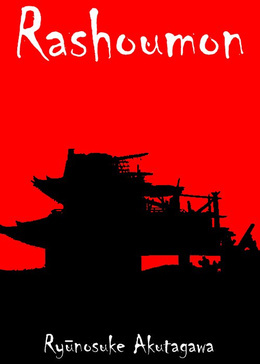
Two Short Stories: Rashōmon; In a Grove - Ryūnosuke Akutagawa

Rating: 
23/01/16

Concatenated thoughts #1 - #2

There was a man sitting by the ruins of a gate known as Rashōmon, listening to the sound of the rain
that was falling over the city of Kyoto. That man had been dismissed by his master and had nowhere to go. So there he was, looking at that gloomy landscape. His thoughts were wandering inside his mind like withering leaves on a windy day. Thinking about a tomorrow when there was nothing to hope for. As the pouring rain started to increase and the day became colder with every passing minute, the man found himself with only two options concerning his inevitable future. He revolved those options in his mind as a set of morals started to make pressure over them. The world had nothing more to give to him. Fate had nothing more to give to him. It was one of those times when responsibility is too much to bear; when freedom interweaves with absurdity and we wish for some Providence to give us a hand. When being alone is the only truth that can be obtained.
Two options. Nothing more. To die of hunger and become another one of those corpses that were taken to the gate. Or to dedicate his life to crime, and thus, keep himself alive.
For although the servant acknowledged that he had to do whatever he could to get by, he didn't have the courage to bring the sentence to its foregone conclusion: "I am bound to become a thief."

Amid such internal struggles, the mind begins to fabricate reasons. Justifications to lighten the weight of any decision that might jeopardize everything that is righteous, honorable, expected. But it was not the rationalization of such matter that helped him make his decision. It was a fire. Her dim firelight, on top of the gate, on that rainy night, barely illuminating the corpses no one would ever remember.
At that moment, if someone again raised the question that the servant had been thinking about under the gate—whether he would starve to death or become a criminal—the servant would almost certainly have chosen starvation, without an ounce of regret. Like the torch the old woman had jammed between the floorboards, this was how ardently the man's heart burned against all that was evil.

A dark, stormy weather that seems to evoke the collapse of an entire society. A flawless use of symbolism to illustrate the vanishing line between a man and a beast.
A savage place where once rational people now just do what they have to do. And yet, I wonder how rational can you be when your life's at stake.

You might have heard of a film named after this short story. A 1950 movie directed by Akira Kurosawa, starring Toshiro Mifune—an actor I love since the very first time I saw him impressing everyone in Seven Samurai. I decided to only watch this movie after reading two short stories. First, Rashōmon that provided the setting. The plot and the characters were taken from another short story named... 


Rating: 
23/01/16


Concatenated thoughts #1 - #2

...In a Grove; another fine inspiration for Kurosawa's film. This story includes four testimonies, one confession, one repentance and a final account concerning the murder of Kanazawa no Takehiro, a 26 year-old samurai, and the rape of his wife, a 19 year-old woman named Masago, by a notorious brigand known as Tajōmaru. Those might be the most accurate details of the entire story since there are many contradictions among all the people involved in this case, making it impossible for the reader to actually know the truth, even when there might not be such a thing... rather than realities naturally connected with subjectivity. The witnesses' inconsistencies might have not been on purpose. Some sort of explanation can be found in the obvious fact that our memory is not completely reliable. Therefore, inconsequential details or relevant events might get lost in a sea of information, especially to those who are not used to such things that eventually improve one's observation skills. However, I do not believe the same can be said about the other three characters: the samurai (in fact, his spirit), his wife and the criminal, for they all have good reasons to invent, embellish or distort their versions to save their lives and honor.

A lie works as a mechanism of self-preservation for most people.
Am I the only one who kills people? You, you don't use your swords. You kill people with your power, with your money. Sometimes you kill them on the pretext of working for their good... It's hard to say who is a greater sinner, you or me.
The plot revolves around some interesting themes that include the inability to know an absolute truth since everything seems to be contaminated by our impressions; self-interest, beauty and lust, dishonor and the atrocities a person is willing to do to remedy that situation, the ephemeral essence of our existence and the heinous rationalization behind the act of taking somebody else's life.
'Truly human life is as evanescent as the morning dew or a flash of lightning', stated the traveling Buddhist priest in his testimony.

Since the film gave me the absurd idea of merging these reviews, it is only fair to say that Kurosawa's approach differs a bit from Akutagawa's story, where ambiguity controls every aspect of it. But the movie is something you do not want to miss due to stunning performances, sublime music and the symbolism they have employed that is simply mesmerizing, ranging from particular elements to a dichotomy conveyed through an exquisite use of light. Besides, you haven't cinematographically (?) lived until you see Mifune fluctuating between serious dialogues and sudden outbursts of laughter with his unique voice.

Anyway, as the book reaches its peak, everything seems rather superfluous. Even words. There was an implied communication between some of the characters in which many things were said through the eyes. A poetic interpretation would not apply here, since I believe they did it to find whatever they were resolved to find. Another excuse to justify their actions. Nonetheless, in the end, I suppose they were all guilty as they were victims.

The story ends with the account of the murdered samurai as told through a medium. It is the part I loved the most since it allowed me to take a glimpse at Akutagawa's beautiful and poignant writing, something that could not exist in the previous attempt to describe cold, hard facts. A desire for truth. An absolute truth that might never be able to avoid the contact with our personal experiences, our opinions, our interests. Our ego.


sábado, 23 de enero de 2016

The Devil - Leo Tolstoy

Rating: 
23/01/16

An affair began; it was simply necessary for his health. As with every obsession, he thought he could break it off when needed.
After some time, he found reassurance in what seemed to be a good marriage.
By an act of mischievous gods or the mere absurdity of the world that usually goes against our wishes, he found his former lover again. Time involves, if not oblivion, an illusion of it that gives humans a chance of survival. But one glance and the past becomes real again. *'Too Much Love Will Kill You' plays in the background*

That distressing time of looking for opportunities to meet her again had begun. A restless mind that could no longer decide the nature of his thoughts, for they were all about her. He was waiting. Always waiting, expecting that by some miracle she would be aware that he was expecting her, and would come here at once...

Too much passion might tempt the fates and tragedy would be right there, waiting for its opportunity.

Well. My little tragedy was reading this novella. I reached a level of boredom I did not think it was possible while reading Tolstoy. The writing, the overly sentimental way of portraying the story, the characters, the endings (yes, it has two endings and found them both equally irritating).
Since I am reading Anna Karenina at this moment, this novella seems to have been written by Tolstoy's drunk shadow. It has some good ratings here so maybe you will enjoy it. It just wasn't my thing. I was going to give it three stars only because of the author. But that's not how things should work around here. (Yes, if it were a book by Dostoyevsky, I would have given it three stars...)

I chose one line.

Nothing does harm if one's mind is at peace.

Whatever that is.