...

miércoles, 1 de febrero de 2017

The Madman - Kahlil Gibran

Rating: 
29/01/17
“Good morrow to thee, brother prisoner.”
— Kahlil Gibran, "The Two Cages"

Another stop during this more diverse literary journey I decided to embark on this year. I chose the highly acclaimed prose of Kahlil Gibran, a man to whose land I'm connected through blood - half Lebanese, half Italian; nothing to do with my innocuous obsession with Russian and Japanese literature, but well, who can control those things anyway?
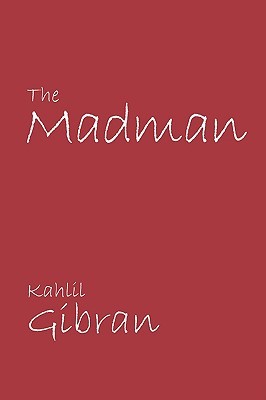
Before I immerse myself in the depths of the universe Gibran created in The Prophet, I decided to get acquainted with his writing and views by reading another book not as widely known. I chose The Madman because I found it somewhat amusing that it wasn't the first time I read a madman's words:

Diary of a Madman (to read soon)

I won't expand on the cliché of a madman's words being more truthful and reasonable than the speech of any other human being considered sane by ordinary standards. I will just say that this collection includes a variety of profound and intriguing parables that constitute a faithful portrait of humanity. The following is one of my favorites.

The Seven Selves
In the stillest hour of the night, as I lay half asleep, my seven selves sat together and thus conversed in whisper:

First Self: Here, in this madman, I have dwelt all these years, with naught to do but renew his pain by day and recreate his sorrow by night. I can bear my fate no longer, and now I rebel.

Second Self: Yours is a better lot than mine, brother, for it is given to me to be this madman’s joyous self. I laugh his laughter and sing his happy hours, and with thrice winged feet I dance his brighter thoughts. It is I that would rebel against my weary existence.

Third Self: And what of me, the love-ridden self, the flaming brand of wild passion and fantastic desires? It is I the love-sick self who would rebel against this madman.

Fourth Self: I, amongst you all, am the most miserable, for naught was given me but odious hatred and destructive loathing. It is I, the tempest-like self, the one born in the black caves of Hell, who would protest against serving this madman.

Fifth Self: Nay, it is I, the thinking self, the fanciful self, the self of hunger and thirst, the one doomed to wander without rest in search of unknown things and things not yet created; it is I, not you, who would rebel.

Sixth Self: And I, the working self, the pitiful labourer, who, with patient hands, and longing eyes, fashion the days into images and give the formless elements new and eternal forms—it is I, the solitary one, who would rebel against this restless madman.

Seventh Self: How strange that you all would rebel against this man, because each and every one of you has a preordained fate to fulfil. Ah! could I but be like one of you, a self with a determined lot! But I have none, I am the do-nothing self, the one who sits in the dumb, empty nowhere and nowhen, while you are busy re-creating life. Is it you or I, neighbours, who should rebel?

When the seventh self thus spake the other six selves looked with pity upon him but said nothing more; and as the night grew deeper one after the other went to sleep enfolded with a new and happy submission.

But the seventh self remained watching and gazing at nothingness, which is behind all things. 


description

* Photo credit: Book cover via Goodreads.

jueves, 26 de enero de 2017

The Luminous Landscape: Chinese Art and Poetry - Richard Lewis (Editor)

Rating: 
22/01/17
Autumn is beginning, the weather is turning chill.
Crickets move in to sing under my bed.
A thousand things surge into my mind
And grieve my heart.
A thousand tales search for words;
But to whom will they be told?
Ruan Ji (210–263)


description
Shen Quan, "Birds and Flowers - Dragonfly on Wisteria"


This is a short yet fine collection of Chinese art and poetry that, regardless of the period, gracefully conveys the profound bond between nature and the human perception of it; the relationship between the essence of every element that constitutes a landscape and human nature.

The mountain moon shines on a cloudless sky.
Deep in the night the wind rises among the pines.
I wish to weave my thoughts into a song for my jade lute,
But the pine wind never ceases blowing.
Zhu Yi-zun (1629–1709)


This book introduces us to the work of numerous Chinese poets who captured the spirit of every one of the elements mentioned above and transformed them into evocative poems capable of portraying the countless shades of our nature, which usually involves a sense of longing that only sees infinity.

I must endure the sorrow of leaving these
green mountains,
But can I forget their blue streams?
Wang Wei (701- 761)


description
Mu Xi, "Eight Views of Hsiao Hsiang."


The contemplation of an ethereal scenery as our own introspection evolves in complete harmony. The subtle and vehement nuances of our mood. The affection for solitude personified by the imposing mountains engulfed by diaphanous clouds. The need to hear another sound beyond the echo of our own voice that barely disrupts the splendor of a pond. Someone to tell how sublime the lake whitened by the moon is. Yes, all the essentials and principles that are part of us.

For Three Days I Traveled Through Mountains;
When the Mountains Came to an End I Was Deeply Moved


Before my eyes, green mountains –
I have truly loved them.
Why not have their craggy heights before me every day?
But this morning, the curtain fell,
the mountains were swept away,
and I felt unhappy, as if I were saying goodbye
to a friend.
Yuan Zhongdao (1570–1624)


Those contrasting realities and other aspects of human life are also depicted through painting, and this collection includes several beauteous creations of Chinese artists that are exquisitely combined with the referred poems. As the editor states, art and poetry were often one entity, to the point of poems being inscribed on the paintings themselves. He summarizes that fact quite eloquently by quoting an old Chinese proverb: “A picture is a voiceless poem, a poem is a vocal picture.”

This collection wasn’t the one I intended to read, but since I still can’t find the book I wanted, I gave this one a try. And I’m glad I did. I found many voiceless poems interspersed with vocal pictures that transport the reader to the beautiful simplicity of nature, despite mountains made of concrete. A relaxing read to hold on to when one has to return to civilization.

description

...haze, mist, and the haunting spirits of the mountains are what human nature seeks, and yet can rarely find.
Guo Xi (1020–1090)


description


* The last painting is not from the book (via Tranquil Resonance)
** Update Jan 26, 17: I found the book I was looking for.


sábado, 21 de enero de 2017

The Enemies - Dylan Thomas

Rating: 
17/01/17


This is a 1934 short story written by a multifaceted author named Dylan Thomas. I already got acquainted with his poetry, something that I thoroughly enjoyed. But I was curious about his side as a storyteller, especially after someone recommended me his prose. It is hard for me to leave the Russo-Japanese bubble, but I am determined to explore other cultures and their literature, if only a glimpse in the form of a short story. So I have been reading some and this one is a most memorable example that urges me to read The Collected Stories.

As it usually happens with my favorite kind of narrative, action is not the main factor. By all outward appearances, we merely have three characters who take part in a very simple story, but the author endowed them with a rich symbolism that continues to intensify as the atmosphere darkens with every glance. His writing combines a variety of elements whose final product is imbued with brilliant uniqueness. A piercing lyricism is hidden behind every metaphor, every simple description.

I can't help the comparison with another short story I recently read: Once Upon a Time by Nadine Gordimer. Her stark style blended perfectly with the powerful themes she analyzed. In that case, the real element was action, through which her views on certain matters were effectively conveyed, but her more straightforward writing (at least in that short story; the first time I read something by her) didn't resonate with me as much as Dylan Thomas' so the connection was rather different. Different but real.

All in all, I enjoyed these few pages. Prose written by a poet. A delectable treat in the first month of the year, during this unforgiving summer - already longing for autumn.


description


* Photo credit: Book cover via Goodreads.


lunes, 2 de enero de 2017

2016 on Goodreads - Various

28/12/16


It is never too late to be what you might have been.
— George Eliot


So, it’s that time of year. Well, my entire bookish journey can be seen by hitting that loud orange button you may notice without any effort. (Random fact, due to Goodreads’ choices, this year I had to resort to some technological magic to avoid being swallowed by giant book covers and superfluous information, but the huge orange box that leads to my reading challenge is still there. Blue is always the safest choice, humans.)

Since I don’t have many eloquent words to share, clearly, I believe it’s wise to let Adulthood Is a Myth speak for me; a magnificent book I reviewed recently, brimming with countless pearls of wisdom expressed through simple pictures that my goldfish could have drawn.
Reader, I told you we were going to come back. You have been warned.

Swann's Way, Anna Karenina, Snow Country, The Decameron, No Longer Human, The Bell Jar, Russian poetry, my first Calvino, my second and a half Sōseki, my third Mishima. This year has been quite enriching when it comes to books. Some were utterly captivating...

description


...while a few were a variety of words I could not follow even if they were holding enormous neon signs over their heads.

description


I perfected some well-known habits, though I gave up trying to read books while walking on the street, after some awkward experience involving coffee.

description


And my talent for enjoying a rainy day was never wasted, thanks to the satisfying combination of books and movies.

description


I should mention that, while I’m in another city now and starting all over again, other aspects of life haven’t changed that much during this strange year since regardless the place, wherever you go, you take yourself with you.¹ Therefore, some ways of thinking continued to knock some little door in the vicinity of my mind.

description


However, one of my goals for 2016 was to be less socially awkward; a brave attempt at challenging my DNA, thinking that might improve my communication skills and even make my life better, despite a myriad of other existential crises, both meaningful and absurd.

description


And I am pleased to announce that on many occasions, it wasn’t that bad, even though there were times when sociability totally backfired.

description

Someone who is reminiscent of everything one shouldn’t do in a friendship once implied that I give common sense platitudes. Perhaps that’s what I do and am doing right now. Another person once wrote that I give myself fully; perhaps that’s what I shouldn’t do since most of the time people don’t value such attention—sorry, I’m not blindly generous; I do expect some reciprocation. Personal things aside, this charming place named Goodreads has brought me much joy and some moments of sadness, the ineluctable dichotomy of life, but this is where I choose to express myself for the time being and naturally, I’d rather lose sight of anything that doesn’t bring me joy (Gilmore reference minus Marie Kondo) than to be divested of my humble sanctuary.
I have to thank all the wonderful people who enrich my life with their reviews. And I'm also grateful for every kind comment I receive, regardless of the level of nonsense of what I write.

This was a good literary year and I hope the next one will be just as rewarding and exciting. And that’s what I wish you all: wonderful books, great music, exceptional movie marathons, knowledge, mystery, excitement, new places, new perspectives and loving, honest, amazing people around you who never (or almost never) take your love and friendship for granted, who have the remarkable ability to make you want to be a better person, changing the things you wish to change, reaffirming the virtues you possess. There are always people worth having around, and it takes courage to say and do the things so as to not losing them. Solitude has its charms but they never last forever, so unless you are an Aristotelian beast or god, you will need people, so let’s hope they bring color to your life, simplicity to your world, and a special place for you in theirs; otherwise, adiós. Their loss. And time is finite.
I read an interesting and unusual book recently, and as I write these wandering, disconnected thoughts, I remember a particular passage.
I can say more or less the same thing as the Pretorian Prefect who was disgraced under Vespasian and went to end his days in the country: ‘I have spent seventy years on earth and I have lived for seven of them.’
Jean-Jacques Rousseau; Reveries of the Solitary Walker, p. 154

If well lived, perhaps seven years are more than enough but, human beings I knew, I know, I thought I knew or will never know, I hope those words never describe your entire life.


Happy New Year. Now, if you’ll excuse me.

description
description


description


¹ Neil Gaiman, The Graveyard Book
* Credit: All pictures from Adulthood Is a Myth (Sarah's Scribbles, #1) by Sarah Andersen.

sábado, 17 de diciembre de 2016

Adulthood Is a Myth (Sarah's Scribbles, #1) - Sarah Andersen

Rating: 
12/12/16

Is adulthood an exciting new challenge for which you feel fully prepared? 


Ugh. Please go away.

I was writing down some thoughts for two reviews, one of a Mishima book and the other of The Bell Jar, but at the moment, I don’t feel like dedicating so much time to that kind of introspection, since in my case, reviewing a book is almost never writing a simple summary. So I will deal with all those books next year, while focusing on other works which are also existentially complex but from a different perspective.

description

A very different perspective.

In the spirit of the preceding paragraph, I have a shocking revelation to share. I can never participate in the GR Awards. Scandalous, right? I mean, after the Best Poetry debacle, it’s still nice to be able to cast some votes considering that, in general, the most recently published book I have read might have been in the bookshop for twenty years.

Another delightful fact I can find in this little adventure regarding the Best Books of 2016 that I Adulthood is a Myth. The irony makes me chuckle. In any case, and in my opinion since not everyone shares my peculiar sense of humor, it was a fun read. The most hilarious, ridiculous, absurd and to some extent, pathetic aspects of life are depicted through comedy and simple, adorable drawings. Andersen's keen ability to perceive different feelings and situations pertaining to the issue of being human and to portray them with such humorous simplicity… it is certainly remarkable. I’m completely enamored with her work and Allie Brosh and her Hyperbole and a Half: Unfortunate Situations, Flawed Coping Mechanisms, Mayhem, and Other Things That Happened now share the podium with lovely Andersen.
almost never pay special attention to: the only book to which I could give my precious and humble vote was

Classics, poetry, extremely dark and heart-rending books that may or may not have a happy ending are not enough. Books brimful of humor, wit, ludicrous yet common situations and reactions and with silly covers that I don't dare to show in public are also a part of me. They mend what other things have broken. They make reality taste like fiction for a while. This year I spent time on situations that, in the end, didn’t deserve my attention and a million chances. I can search for my lost time but will never get it back. Still, despite giving too much and receiving über-nothing at times, I would like to end this year with a smile. Perhaps, what I consider a flaw is precisely why I should be smiling.

This charming book won Best Graphic Novels & Comics. I thought of giving a little speech but, you know.

description


Besides, giving speeches usually precedes a simple meal or large quantities of food and...


description


...let’s just not tempt fate. So I wrote this nonsense instead, as I also tell you this: Sarah and I will be back in a few days. For now, I’ll keep reading my books and enjoying one of my valid hobbies.


description


description


* Credit: Book cover via Goodreads.
All pictures from Adulthood Is a Myth (Sarah's Scribbles, #1) by Sarah Andersen.

domingo, 11 de diciembre de 2016

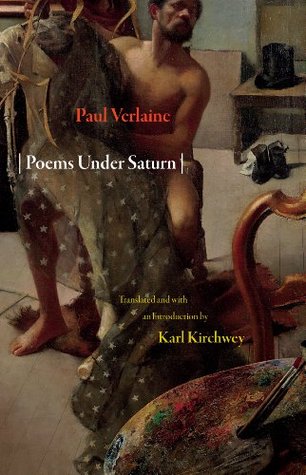
Poems Under Saturn: Poèmes saturniens (Lockert Library of Poetry in Translation) - Paul Verlaine, Karl Kirchwey (Translator)

Rating: 
05/12/16

Sentimental Stroll

The setting sun cast its final rays
And the breeze rocked the pale water lilies;
Among the reeds, the huge water
Lilies shone sadly on the calm water.
Me, I wandered alone, walking my wound
Through the willow grove, the length of the pond
Where the vague mist conjured up some vast
Despairing milky ghost
With the voice of teals crying
As they called to each other, beating their wings
Through the willow grove where I alone wandered
Walking my wound; and the thick shroud
Of shadows came to drown the final rays
Of the setting sun in their pale waves
And, among the reeds, the water
Lilies, the huge water lilies on the calm water.

*

Promenade sentimentale

Le couchant dardait ses rayons suprêmes
Et le vent berçait les nénuphars blêmes;
Les grands nénuphars entre les roseaux,
Tristement luisaient sur les calmes eaux.
Moi, j’errais tout seul, promenant ma plaie
Au long de l’étang, parmi la saulaie
Où la brume vague évoquait un grand
Fantôme laiteux se désespérant
Et pleurant avec la voix des sarcelles
Qui se rappelaient en battant des ailes
Parmi la saulaie où j’errais tout seul
Promenant ma plaie; et l’épais linceul
Des ténèbres vint noyer les suprêmes
Rayons du couchant dans ses ondes blêmes
Et des nénuphars, parmi les roseaux,
Des grands nénuphars sur les calmes eaux.

Verlaine, observer and blind, creator and destroyer; a poet made of light and shadows. A parallel between this author and Rimbaud's poetry is predictable but ineluctable. Undoubtedly, while I liked the young poet's sophisticated song of perpetual revolt and mystifying symbols, I was able to connect with Verlaine's art on a deeper level (also young when he wrote this collection), as he also unveiled all aspects of human nature—both sublime and decadent, depending on the eye of the beholder—with sheer beauty, sumptuous symbolism and a clear voice whose melody resonated with me several times, creating evocative images which may portray every emotion we are capable of feeling. 


description
 * Photo credit: Book cover via Goodreads.


viernes, 9 de diciembre de 2016

San Manuel Bueno, Martir - Miguel de Unamuno

Rating: 
15/02/16


I don’t know what is true and what is a lie, nor what I saw, or what I dreamed—or rather what I dreamed and what I only saw—nor what I knew, nor what I believed. I don’t know if I am transferring my consciousness to this paper as white as snow, and if it will remain there, leaving me without it. Why should I still keep it…? Do I know anything?; do I believe anything? Has what I am writing about here really happened, and did it happen like I am telling it? Can things like these really happen? Is this just a dream, within another dream?

A priest, a village, faith and doubts.
I could write many paragraphs about this short novel, but I would be repeating¹ myself

First time I read Unamuno's prose. Definitely not the last.
You can find this little gem online. Spanish - English


description

* Photo credit: Book cover via Goodreads.