...

viernes, 4 de noviembre de 2016

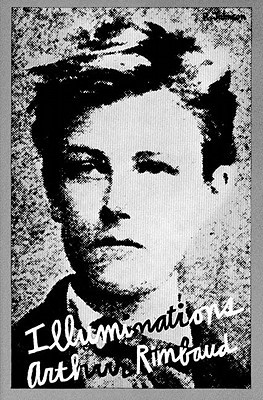
Illuminations - Arthur Rimbaud


Rating: ★★★
28/10/16
Youth
I. Sunday

When homework is done, the inevitable descent from heaven and the visitation of
memories, and the session of rhythms invade the dwelling, the head and the world of the spirit.
—A horse scampers off along the suburban turf and the gardens and the wood lots, besieged by the carbonic plague. Somewhere in the world, a wretched melodramatic woman is sighing for unlikely desertions.
Desperadoes are languishing for storms, drunkenness, wounds. Little children are stifling curses along the rivers.
I must study some more to the sound of the consuming work which forms in all the people and rises up in them.

II. Sonnet
Man of usual constitution, wasn't the flesh a fruit hanging in the orchard? —O childhood days!—wasn't the body a treasure to spend?—wasn't love the peril or the strength of Psyche? ... 


description
* Photo credit: Book cover via Goodreads.


viernes, 28 de octubre de 2016

The Departure of the Train - Clarice Lispector

Rating: ★★★★
20/10/16

Angela
Yes. She’d already had plenitude. When she and Eduardo were so in love that while in the same bed, holding hands, they had felt life was complete. Few people have known plenitude. And, because plenitude is also an explosion, she and Eduardo had cowardly begun to live “normally.” Because you can’t prolong ecstasy without dying. They separated for a pointless, semi-invented reason: they didn’t want to die of passion. Plenitude is one of those truths you happen upon.

Dona Maria Rita
The old woman, as if she’d received a mental transmission, was thinking: don’t let them leave me alone. How old am I exactly? Oh I don’t even know anymore.

Right afterward she let the thought drain away. And she was peacefully nothing. She hardly existed. It was good that way, very good indeed. Plunges into the nothing.


Us
Near the end? Oh, how it hurts to die. In life you suffer but you’re holding on to something: ineffable life. And as for the question of death? You mustn’t be afraid: go forward, always.

Always.

Like the train.


description

A train that I wouldn't want to leave behind, now that I have Lispector's torrent of thoughts flooding every corner of my mind.


* Photo credit: Book cover via Goodreads.

jueves, 13 de octubre de 2016

The Guest Cat - Takashi Hiraide

Rating: ★★★
09/10/16
...observation is at its core an expression of love which doesn’t get caught up in sentiment.

Those green eyes glowing in the dark ceaselessly, endowing the cover of this book with a breath of life, a dream of plenitude - those eyes were an irresistible enticement. An immediate move was imperative; The Guest Cat had to be on my shelf. Unfortunately, my expectations were far too great, especially taking into account the fact that one of the ingredients of this plot is supposed to be a couple who no longer have much to say to each other and a cat is a new bond between them. (view spoiler). However, I was able to overlook that curious fact because this novella has other qualities that make it a potentially enjoyable read. Hiraide's writing is an ode to the beauty of simplicity.

As an artist meticulously amalgamates the elements of nature with the essential constituents of humanity through the art of ikebana, with the same quiet harmony, carefully selected words interweave with a sensitive and thoughtful outlook on life, creating a luscious prose poem echoing the implacable passage of time.

description
She would always point out to us the importance of being natural, of being ourselves.

As most Japanese novels I have read, there is an exquisite attention to detail; everything and everyone are depicted with strokes of the most elegant form of poetry in which intimacy, an unusually expressive intimacy is a significant component. The simplicity of this story blends in perfectly with the sheer delicacy of Hiraide's language which flows softly, in a whisper; a gentle wave trying to reach somebody's shores and engulf them with meaningful contemplation.

What's interesting about animals, my wife explained, is that even though a cat may be a cat, in the end, each individual has its own character.

“For me, Chibi is a friend with whom I share an understanding, and who just happens to have taken on the form of a cat.”


Never such a poignantly lyrical prose sounded so familiar.
Funny, these aversions we have for certain things. It does make you wonder a bit whether it's some kind of karmic connection with a past-life experience, even if that's just a bit too weird.

Nonetheless, Hiraide's writing wasn't enough. This novella tells a lovely story but didn't resonate with me as much as I would have hoped. Highly evocative, this writer's words become palpable objects and serene sceneries, but amid copious descriptions of any architectural piece one may imagine and abundant lines – ranging from the ethereal to the mundane – regarding the couple's relationship with the cat and their surroundings, something was missing. I remember turning the last page and looking through the window, as if I could find out there, in the vast city, in the overcast skies, whatever it is that I couldn't find in this book.


* Photo credit: Book cover via Goodreads.
Ikebana via conyeucuaban.com
Cat and flower via Pinterest

sábado, 1 de octubre de 2016

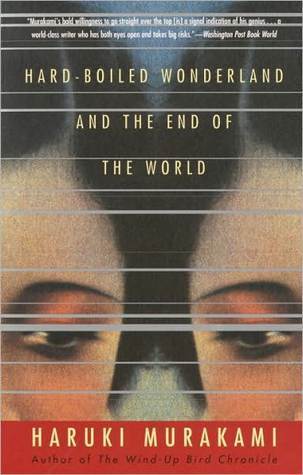
Hard-Boiled Wonderland and the End of the World - Haruki Murakami

Rating: ★★★★★
26/09/16
And I couldn't be any other self but my self. Could I?

There is always a possibility.

In the summer of 1962, a poet wrote a song that would later become the last hymn to be heard as the
end of the world approached. That is the song I chose to be my companion while writing another non-review; a song that is being followed closely by the mellifluous gusts of wind that break the silence of this monochromatic night.
Being my first Murakami, quite frankly, I didn't know what to expect. This is, without a doubt, one of the most original novels I have read this year. And I can't only ascribe this notion to the creativity of the plot, since the variations of the language used to illustrate it were another element that left me quite impressed.
I felt disconnected. Converting numbers in my brain was my only connection to the world. Most of my free time I chose to spend alone, reading old novels, watching old Hollywood movies on video, drinking. I had no need for a newspaper.

For a moment, I walked out of the comfort zone provided by classics and plunged into the world of more contemporary expressions in which I still feel like a slightly awkward guest. Murakami's writing stirred my senses from beginning to end. It did justice to the concept that was always hovering over this story: the duality of things around us, the dichotomies within ourselves. For this is a book that includes two different worlds that may or may not coalesce into one single reality someday. The first world is “Hard-Boiled Wonderland”, where I found a peculiar voice; a somewhat stark, unvarnished writing. Words that tried to conceal the tiniest trace of emotional connection, congenitally unable to do otherwise. Detached words probably under the influence of an old pledge to keep distance from the world as a desperate attempt to protect themselves, to prevent their fragile system from blowing to smithereens. Words uttered by a narrator who was able to drink gallons of alcohol and then face inconceivably difficult situations and the most disgusting creatures ever, while thinking about sex on every given situation but still capable of disclosing colorful beads of a philosophical nature, which he tried to camouflage with waves of indifference, or rather fear wearing the translucent robes of indifference.
Who remembers stars? Come to think of it, had I even looked up at the sky recently? Had the stars been wiped out of the sky three months ago, I wouldn't have known... My world foreshortened, flattening into a credit card. Seen head on, things seemed merely skewed, but from the side the view was virtually meaningless—a one-dimensional wafer. Everything about me may have been crammed in there, but it was only plastic. Indecipherable except to some machine.

The second world is, ironically enough, “The End of the World”, where Murakami's writing acquires a more expressive tone with which places and people are vividly portrayed. There, a narrator depicts a seemingly perfect world echoing an ancient nirvana, an empty world, a tempting world; descriptions that also convey one significant distinction: everything might be happening now. Only living will remain. Undisturbed, peaceful living.
Facts unfold following the familiar cadences of a foreign narrative and I – stunned, in deep thought, marveled at how every piece falls into the right place, slowly, cautiously, with desperate detachment and stoic passion until the puzzle is almost complete – contemplate once more how life bifurcates and reveals two realities intrinsically different and yet strongly connected: one belongs to the actual world and the other to the realm of the mind. Everything might be connected in this world surrounded by walls . But then again, perhaps everything is an illusion, nothing is connected and we are truly alone. Hopefully, that too could be another figment of one's imagination.
You tell me there is no fighting or hatred or desire in the Town. That is a beautiful dream, and I do want your happiness. But the absence of fighting or hatred or desire also means the opposites do not exist either.

Despite the differences that perhaps exist only in the mind of this inexperienced reader, both forms of writing converge eventually. That is what made me change my opinion, since four solid stars became a glimmering 5-star rating after reaching to a certain point amid the distinctive ebb and flow of this novel. From that moment on – a moment which I will keep to myself, hoping you find yours – an unbridled desire to know more took over my body and I couldn't put this book down until it was over. Shortly after, I realized the mistake I had made, since I wasn't prepared for the billows of emotions that were about to sweep away every vestige of a former calm. (Not many are able to resist the allurements of the literary anxiety.)
That's the way with the mind. Nothing is ever equal. Like a river, as it flows, the course changes with the terrain.

After stepping in the middle of seven sad forests, and being out in front of a dozen dead oceans, questions began to haunt me, relentlessly, until some invaded my whole being and there one still lingers, for I haven't found any word willing to form a decent answer.
Here, in the palm of my hand, I have the story of a man facing an impending fate, remembering distant errors that will never be mend, old lyrics and classic scenes, the discrepancies between desire and reality, between who we are and who we would like to be; the little we say, the echoes of regret through the mountains of things unsaid; the departure from a world with the aftertaste of nothingness to enter one resembling everything. Despair, disillusionment, hell, reality; himself. Love, fear – love. Multiple shades of existence encapsulated in twenty-four hours. A woman, a song, the park under the sun. Some limited happiness had been granted this limited life. One last peal of a winter bell. The sounds of the end of the world.

description

Could I have given happiness to anyone else?


* Photo credit: Book cover via Goodreads. 
Snow and sun via wallhere.com


martes, 20 de septiembre de 2016

En memoria de Paulina - Adolfo Bioy Casares

Rating: ★★★★
12/09/16

-Dante: Goodbye, dear master.
-Virgil: How come! What about Purgatory? And Paradise?
-Dante: For what! He who knew Hell does not have any interest in Purgatory. And regarding Paradise, he already knows it is the absence of hell.

-Dante: Adiós, dulce maestro.
-Virgilio: ¡Cómo! ¿Y el Purgatorio? ¿Y el Paraíso?
-Dante: ¡Para qué! Quien conoció el Infierno ya no tiene ningún interés en el Purgatorio. Y respecto al Paraíso, sabe que es la ausencia de infierno.


~ Marco Denevi, “A la salida del Infierno” (“At the gates of Hell”)

Last weekend, I've been reading (shocking!), ferociously, completely oblivious to time and eventually to the sudden hot weather; sudden and alarming, since the sun looked rather ominous, making me think about those summer days that will soon come, whose intense heat annually deprives me of the possibility of functioning on a basic human level. In any case, after pushing those abominable climatic thoughts away, I continued to read short stories written by Argentine authors. (Naturally, I read at a faster pace in Spanish; I found a couple of terms I wasn't familiar with, but they didn't slow down the process.) I revisited the multitudinous universe of one unique Jorge Luis Borges, I fondly remembered my journey with Julio Cortázar, I listened to Silvina Ocampo's disturbingly cryptic accounts, I took a nap by dint of Esteban Echeverría's poetry and dreamed about the world of gauchos through Ricardo Güiraldes' eyes, I woke up and became acquainted with Leopoldo Lugones' fantastic narratives and with Roberto Arlt's exceptional creativity, I found another gem by Uruguayan writer Horacio Quiroga, I ended up massively confused by Haroldo Conti's simplicity, I grew accustomed to Marco Denevi's playful approaches to extremely formal affairs, I saw a plethora of thoughts passing through Liliana Heker's mind, I joined Manuel Mujica Láinez on his search for the true nature of people, and I had the opportunity to savor again the ambrosial prose of Adolfo Bioy Casares.
This particular short story called “In memory of Paulina” symbolizes the tension between love and jealousy, as magic rationally steps into the characters' world.
Paulina me dijo: Me gusta el azul, me gustan las uvas, me gusta el hielo, me gustan las rosas, me gustan los caballos blancos. Yo comprendí que mi felicidad había empezado, porque en esas preferencias podía identificarme con Paulina...
Pensé también: En lo que me parezca a Paulina estoy a salvo. Veía (y aún hoy veo) la identificación con Paulina como la mejor posibilidad de mi ser, como el refugio en donde me libraría de mis defectos naturales, de la torpeza, de la negligencia, de la vanidad.

Paulina said to me: “I like blue, I like grapes, I like ice, I like roses, I like white horses.”  And I knew that my happiness had begun because these preferences of Paulina’s were also mine...
I also thought: “I am safe as long as I resemble Paulina.” I saw (and see even now) identification with Paulina as the best possibility for my own being, as the refuge in which I would be freed of my natural defects, of my obtuseness, my negligence, my vanity.

I often get lost in the world of foreign literature, unintentionally neglecting the treasures I have in my own land.


* Photo credit: Book cover via Goodreads.

viernes, 2 de septiembre de 2016

No Longer Human - Osamu Dazai, Donald Keene (Translator)

Rating: ★★★★
28/08/16


LXXXV

They say that “time assuages”,—
Time never did assuage;
An actual suffering strengthens,
As sinews do, with age.

Time is a test of trouble,
But not a remedy.
If such it prove, it prove too
There was no malady.

Emily Dickinson, Part Four: Time and Eternity, The Complete Poems

*

Everything passes. (169)

A gentle breeze brushes the branches of luxuriant trees brimming with cherry blossoms which surround the quaint park bench I chose as my reading spot. A diaphanous cloud softly attached to the sun creates the sensation of being part of a watercolor painting bound to become the antithesis of an actual winter day. Away from the bustle of an anonymous city, from the thoughts that keep accumulating after roaming awkwardly around the mind, trying to repress relentless pangs of sadness. The only sound I would like to hear is the one pages make as they silently turn in order to unfold this heartrending story; one page after the other, reverberating through the Gardens, ensuring the quietude which, by virtue of a book's mere presence, clears my mind completely. If only for a few hours. Or for the briefest minute unable to last sixty wretched seconds.
I wonder if I have actually been happy.

No Longer Human, published in 1948, is a timeless piece of writing that portrays the sense of disqualified as a human being.
isolation of Oba Yozo, a confused child who became a troubled man; roughly, a deceitful person unable to show his true nature to most people, a man
The book is mostly composed of three memoranda; the last one is divided into two parts. Dazai interwove significant personal experiences into his writing; it was somewhat striking to identify those autobiographical aspects as I read our tormented protagonist's story.

The first memorandum is about Yozo's childhood. From an early age, he felt overwhelmed by a profound sense of alienation, which was increased by the presence of his overbearing father. In the end, incapable of understanding human beings, confused by their selfishness and artificial personalities, he steps into the world and becomes another unauthentic person, begetting the perception of having a jocose and amusing manner in the eyes of people around him. In his mind, such farce was the only way he could find to face the creatures he feared the most: humans. As these attempts take place, he ends up harboring a feeling many of us are familiar with but, in another display of egotism triggered by human condition, perhaps the limitations of our surroundings, we tend to think we are the only ones feeling that way.
All I feel are the assaults of apprehension and terror at the thought that I am the only who is entirely unlike the rest. It is almost impossible for me to converse with other people. What should I talk about, how should I say it? – I don't know.

I could connect with some of Yozo's reflections, naturally. I am not someone who immediately trusts in people, especially after many close encounters with disappointment. In that sense, I understood completely the character's reasons for keeping his agonies locked in his chest, imbued with a persistent sense of mistrust. Nevertheless, I could never endorse his absolute insincerity towards everybody. It is impossible not to take this book to everyday life; how distressing it must be to interact with someone so irrationally fearful and indecisive, unwilling to respond when another person tries to reach out, incapable of seeing his ability to actually love. Yozo's feigned emotions, which culminated with the perfect role of the farcical eccentric, somehow shielded the people who cared about him from his recurrent fears, though the element he chose to protect himself (and them, who knows) was deception.

The second memorandum is mostly about the continuation of Yozo's self-destructive behavior, which by then included excessive drinking, smoking and many encounters with prostitutes (to whom he dedicates some degrading observations). Until he finds a woman who makes him feel, for the first time, as if he had freed himself from fear and uneasiness. He didn't feel the need to hide his gloomy disposition. Unfortunately, things rapidly started to go awry.
The weak fear happiness itself.

Even though he had many love affairs, one thing did not change: he was equally cruel to all women who cared about him (view spoiler). The seemingly cogent arguments and plausible excuses to justify his actions are infinite. In any case, the results were indelible wounds and irreparable consequences.
“You look like someone who's had an unhappy childhood. You're so sensitive–more's the pity for you.”

That same memorandum also reflects the conflicts that are present in human relationships in the context of an adverse socio-economic status. At one point, the humiliation of not being able to provide for a woman was insufferable; the last straw that culminated in another mistake.

The third memorandum chronicles the protagonist's late twenties.

Several ambivalent feelings arise from reading about a character such as Yozo. I was able to comprehend some of his fears and his genuine sense of alienation, though other times I saw him as an inconsiderate man who epitomized cruelty and selfishness.
After a life of lying to himself and to others, Yozo chooses to write about his miseries and atrocious acts without a shred of falseness. Without resorting to any sentimentality – in contrast to his entire existence, his notebooks do not try to please anyone – he tells his story without engaging in unavailing circumlocution, elegantly gliding to the brink of brutal honesty as he circumvents every rule of an ostensibly civilized world. Despite the stark writing style which predominated in the novel, Dazai endowed it with not only plentiful profound meditations which may resonate with many readers around the globe, but with an exquisite language reminiscent of wistful fragments of poetry written in some bleak hotel room. There is no rhapsody of praise to nature, no writer simply extolling the virtues of silence. This novel is a one-way ticket to a person's psyche. Indubitably, a memorable journey since Dazai's words might linger in the vicinity of one's mind for far too long.
Unhappiness. There are all kinds of unhappy people in this world. I suppose it would be no exaggeration to say that the world is composed entirely of unhappy people. But those people can fight their unhappiness with society fairly and squarely, and society for its part easily understands and sympathizes with such struggles. My unhappiness stemmed entirely from my own vices, and I had no way of fighting anybody... Am I what they call and egoist? Or am I the opposite, a man of excessively weak spirit? I really don't know myself, but since I seem in either case to be a mass of vices, I drop steadily, inevitably, into unhappiness, and I have no specific plan to stave off my descent.

Selfishness or a weak spirit. I am not in the position to ascertain to which of those personalities Yozo belongs. Recently, I stumbled upon a quote by Jane Austen (which can be found in her novel Mansfield Park) that makes me ponder his situation, since it states the following: “Selfishness must always be forgiven, you know, because there is no hope of a cure.” In that context, Austen only refers to selfishness; she is not as bold as one M. de Norpois (I just met him so I still don't know what to think of him) who declared once that for every sin there is forgiveness.
We all carry within us some degree of egoism – in fact, it can be seen as another defense mechanism regarding the protection of one's heart; I should know. But of course, some humans are replete with it. So much so that sometimes they might seem incapable of feeling pain, as they might do everything in their power to avoid it, regardless of the pain they are inflicting on others. To me, Yozo's case is somewhat paradigmatic; he relied on his antics to deceive people – and thereby being able to deal with them – instead of turning to superficially veracious words he never meant to say or a perpetual pusillanimous silence. Either way, Yozo suffers; he is not a pretender who thinks that being unable to fit into society is something that makes him special. It makes him truly unhappy. However, fighting for our existence is certainly not impossible; as a matter of fact, it is a more reasonable plan than sitting comfortably, feeling miserable and just waiting for the world's gaping maw to tear us apart.
I thought, “As long as I can make them laugh, it doesn’t matter how, I’ll be alright. If I succeed in that, the human beings probably won’t mind it too much if I remain outside their lives. The one thing I must avoid is becoming offensive in their eyes: I shall be nothing, the wind, the sky.”

Unlike Austen, I can't say for sure that there is no hope of a cure. The idealistic within me, breathing optimism and naivety daily, will claim that there is. The cynical within me, a little bruised due to some unpleasant experiences in life, will guarantee that, in reality, there is no remedy for such unfortunate malady. Despite this state of uncertainty, I agree with the first part of Austen's statement; we should forgive. As Dickinson's poem continues to echo in my head, the thought that time alone doesn't heal all wounds resounds just as much; indeed, it is what we do with that time that may alleviate certain symptoms. Forgiveness is an active way to deal with anything that once caused a small cut or unfathomable pain. It is not only part of a process which is essential to avoid hardening one's heart, it is also a humane way to treat others, even those whose actions leave a bittersweet aftertaste, even if I am not forgiven. Not that the world needs my foolish perspectives in the form of endless paragraphs of little merit, of course, but I for one choose to forgive, and that decision is made taking into consideration, among other things, the possibility that such cure, in fact, does not exist. I wouldn't want to magnify the weight of the cross that some people have to carry around, for the absence of said remedy might be already too harsh a punishment.

I turn the last page and the previous luminous scenery metamorphoses into a typical winter day. Storm clouds are already appearing above the horizon; they will soon cover these empty cherry trees, and me. I walk back home, trying not to think about the intense sky's azure, the park bench, the limpid lake I never mentioned, the cherry blossoms, the tragedy of being no longer human. Trying not to think.
Indomitable thoughts.


* Photo credit: Book cover via Goodreads.